payday loans

Archive for the ‘Uncategorized’ Category

Mulitgrain Morning Porridge

I had the original recipe for this porridge in my collection for a while but never gave it a try.

Multigrain Porridge

Multigrain Porridge

Not because it didn’t appeal to me (otherwise, I wouldn’t have clipped it) but because I so rarely make homemade porridge for breakfast. During the week, I never eat breakfast at home; on weekends, I never have time and so usually just grab leftovers. I still don’t often

have time, but I’ve been trying, whenever I can, to make a healthy, energy-inducing breakfast. So, I made some modifications, based on what I had on hand and my personal preferences. The good thing is that this stays well in the fridge for a few days, so I can make a big batch and just reheat it.

Mulitgrain Morning Porridge

Clockwise from upper right: Wheat berries, grits, amaranth, oats.

Clockwise from upper right: Wheat berries, grits, amaranth, oats.

Adapted from “Multigrain Breakfast Porridge” by
Bruce Weinstein and Mark Scarbrough, Cooking Light, Oct. 2007

½ cup wheat berries, rinsed

¾ teaspoon sea salt

1/3 cup steel-cut oats

3 tablespoons regular grits

¼ cup amaranth

¾ cup coconut or almond milk

¼ maple syrup

¼ cup dried blueberries or other dried fruit

½ cup chopped walnuts or other nutsIMG_0153

Bring 5 cups water to a boil. Add the wheat berries and salt; reduce the heat to medium-low and simmer, partially covered until almost tender, 20 to 30 minutes.

Add the oats, grits, and amaranth and stir. Continue simmering until all grains are tender, about 15 minutes, stirring frequently. Stir in coconut milk, maple syrup, and fruit and cook another 2 minutes, stirring frequently. Stir in nuts. Serve hot.

This porridge will keep for several days in the refrigerator. To reheat, stir in a little more coconut milk or water until it reaches the desired consistency. Heat over medium-low heat or in the microwave for 1 to 2 minutes.IMG_0155

Makes 4 servings.

Back From FoodBlogSouth 2013

IMG_0106I just got back from FoodBlogSouth 2013 in Birmingham, AL, and I have to say that I really enjoyed it. I learned some really good stuff about optimizing my blog, working on TV and in radio, how to take great food shots with my smartphone, strategies for creating a brand, and using video content. Plus, I met some really nice people.

The most informative and helpful (to me) session was the optional one I took on Friday, called Honing Your Edge (which was a great play on words). We got a detailed lesson on using various media outlets—TV, social networking sites, print, and radio—to market ourselves and increase our visibility. It was a really useful session. So, a big thank-you to Lisa Ekus, Virginia Wills, and Tamie Cook for the information and help on my personal marketing material.

I got to meet Dianne Jacobs, author of Will Write for Food, which is a necessary book to have if you’re a food writer. She was not only very nice but funny and witty, too. She did a seminar about the ethics of food blogging. Most of what she said I knew already because I follow her blog (also called Will Write for Food) and she talks about this stuff regularly. But seeing her talk about this stuff in person brought her points home and clarified a couple of things.IMG_0119

The pre-party was catered by Jim & Nick’s BBQ and the afterparty was at Good People Brewing Co. and sponsored by Visit Baton Rouge. BBQ before and Bayou cuisine after. (If you’re wondering what Bayou cuisine entailed, let’s just say that along with crawfish, I was looking at alligator meat and frogs’ legs. The alligator tasted rather bland, but I couldn’t bring myself to try the frogs’ legs.)

The thing about creative conferences (i.e., writing, cooking, etc. versus business/work-related) is that I often go feeling discouraged and depressed. The reason for that is twofold: 1) By the time the conference rolls around, I’ve reached a level of frustration over the fact that I’m still not doing what I want to do (for a living); and 2) knowing that at the conference I will be meeting people who ARE working in the field I want to be in, if not full time, then at least part time successfully. And seeing other people enjoying their work and being paid for it gets me a little crazy. I become quite envious.

Envy is a horrible thing. It eats you up and makes you unhealthy, and karmically, it’s bad too. There’s a reason why envy is one of the 7 deadly sins. It’s just bad. Very bad. But I digress.IMG_0134

So, I go to these conferences with those factors bringing me down. On the plane, I sit there and wonder just how many of those people I will meet and hate. When I shake someone’s hand and say, “Nice to meet you,” will I really be thinking “I hate you, I hate you, I hate you?”

But something happens while I’m at the sessions. I find myself getting inspired. I mean, that’s the whole purpose of going there—to learn new things and get inspired—but because I’m so low from my screwed head, I just don’t expect it.

But when the sessions are interesting, informative, and fun, it sparks the ambitious part of me that was dampened. Then I start meeting people and I discover that they’re a lot nicer than I thought they would be. I manage to step out of my comfort zone and talk to people (a few) and exchange a few business cards and that makes me feel good.

I don’t expect anything to change right away, but I feel more positive about my possibilities. And that alone makes it worth the trip.

Blond Brownies

January 22 is National Blond Brownie Day—as if anyone needs an excuse to eat a brownie, blond or otherwise.

Although blond brownies, or blondies, aren’t as popular as brownies, it is believed that they may have predated brownies. Foodtimeline.org states:

According to old cookbooks, blonde brownies (also known as “Blondies”) predated chocolate brownies, though under different names. The primary ingredients of blondies (brown sugar/molasses and butter) compose butterscotch, a candy that was popular in America in the mid-19th century. Some 19th century American cookbooks contain recipes that combined traditional butterscotch ingredients with flour and a leavening agent (baking powder or soda). Presumably, these recipes would have produced something similar to the blonde brownies we enjoy today.

I’ve made some pretty good blondies, rivaling the many brownies I’ve made and tasted. I’ve

Photo: chocolate-candy-mall.com

Photo: chocolate-candy-mall.com

also been experimenting a lot with making gluten-free/wheat-free baked goods because I’ve been getting a lot of requests for them and I tried my hand at blondies. For people who have a wheat allergy but not Celiac Disease, I found that a 1:1 substitution of spelt flour works very well.

Also, generally speaking, blondies can be boring to look at. Unlike a brownie, with its dark, alluring, chocolaty sheen, blondies don’t exactly draw you in with their plain-jane appearance. Topping are how you will appeal where blondies are concerned. I don’t think frosting is a good idea, because they can easily be mistaken for one of those Entenmann’s-type cakes in a box (not that I have anything against Entenmann’s). Plus, frosting is boring. Toppings give the blondies some zip. You can try chocolate chips, butterscotch chips, coconut, nuts, chocolate, dried fruit, etc.

This is my version of blondies, with spelt flour and walnut-chocolate chip topping.

Nut-Chocolate Chip Blondies
Print
Ingredients
  • ½ cup butter, room temperature
  • 2 cups packed brown sugar
  • 2 cups spelt flour
  • 1 teaspoon baking powder
  • ½ teaspoon salt
  • 1 teaspoon vanilla extract
  • ¾ cup milk (regular, soy, almond, or coconut)
  • 1 egg
  • ½ cup chopped walnuts, almonds, or pecans
  • 1 cup semi-sweet chocolate chips
Instructions
  1. Preheat oven to 350 degrees. Line a 9 x 13-inch baking pan with parchment paper and set aside.
  2. Using a mixer, mix the butter and sugar together until light and fluffy. Add the flour, baking powder, and salt and blend well. Add vanilla, milk, and egg and blend until smooth.
  3. Pour into baking pan and smooth it out. Spread the nuts and chocolate chips evenly across the top.
  4. Bake until a toothpick inserted into the center comes out clean, about 30 to 35 minutes.
Notes

Blondies can be a blank canvas for many different flavor profiles. Try using different chips, like white chocolate, butterscotch, peanut butter, or cinnamon, or adding coconut, dried fruit, sesame seeds, or M&Ms.


Jamaican Black Cake (aka Christmas Cake)

Several years ago, a co-worker, who was from Jamaica, introduced me to black cake. I asked her for a recipe (which I shared on Epicurean.com), and every year since, I’ve told myself that I would make this cake. Also referred to as Christmas cake, it is a tradition in Jamaica (and other parts of the West Indies) to serve this cake at Christmas, as well as weddings and other special occasions.

The problem is that in order to get a really good black cake, you have to begin the process at least several weeks in advance, and who’s thinking about Christmas in September? (Okay, well, many of you probably start your Christmas shopping in July, but the way my life has been going the past several years, my thoughts about Christmas have had me on the brink of nervous breakdowns trying to find gifts on Christmas Eve.)

But this year, I was determined to make a black cake, so I marked my calendar for September. That’s when I was going to initiate the process. And so I did.

Dried fruit

Dried Fruit

Black cake/Christmas cake is also sometimes called plum pudding because it is derived from the traditional British Christmas cake of the same name. Plum pudding is basically fruit cake and the addition of brandy  was to keep it fresh on long voyages across the seas (plus it tastes good). (Plum pudding is traditionally lit aflame at presentation time. I suspect that this was done the first time by accident as a result of someone getting a little too close to it with a candle or something.) When the British began trading through the Caribbean, the plum pudding went with them. But rum, rather than brandy, was the liquor available on the islands, and sugar and molasses became the sweeteners. The addition of allspice and nutmeg are more Island touches on the old recipe.

Fruit port and rum

Fruit in port wine and rum

It is said that the original recipe for plum pudding dates to Medieval times, when it called for 13 ingredients—1 for Jesus Christ and 12 for his apostles—and was to be made on Christmas Eve. Since then, it’s become a more elaborate affair. As other fruit cakes, a black cake contains various dried fruits that are macerated in rum and, sometimes, port wine for weeks. The ideal time to bake it is a couple of weeks before Christmas, and as the days go by, it is occasionally basted with more booze.

So, in September, I put my fruit—raisins, golden raisins, plums, figs, dates, and cranberries—in a large container with a cover and poured in a wee bit of rum and port wine and let that sit until December. About a week before Christmas (I couldn’t get around to it before then), I baked the cake, basted it a few times, and brought it for Christmas Eve dinner. It came IMAG0262out fabulous. It was moist and incredibly flavorful, and even though it was loaded with alcohol, the rum and wine had mellowed into a fruity liqueur-like flavor. It’s not like any fruit cake you’ve ever had, I guarantee it. Normally, black cake is served as is, but I wanted it to look a little more festive so I iced it with a basic powdered sugar icing (which eventually melted). The only thing was that my cake was not as dark as it should be (it is called black cake, after all). So, I increased the browning in the recipe. Browning is also known as burnt sugar and can be found in West Indian markets.

I share this with you now so that you can prepare ahead of time for next Christmas. Enjoy!

Black Cake 2

Jamaican Black Cake (aka Christmas Cake)
Print
Author: MizChef
This cake is a traditional Christmas and special-occasion dessert throughout the West Indies, but particularly Jamaica, where it’s brought to weddings and parties. Do step 1 of this recipe approximately 2 months (or at least 2 weeks) before you want to bake the cake.
Ingredients
  • 4 cups mixed dried fruit (raisins, currents, prunes, citron, cherries, dates, figs, etc.)
  • 1 cup white rum
  • 1 pint port wine
  • 1 ½ cups all-purpose flour
  • 2 tablespoons baking powder
  • 1 cup butter
  • ½ cup sugar
  • ½ cup packed brown sugar
  • 6 eggs
  • 3 tablespoons browning*
  • 1 teaspoon vanilla extract
  • 1 teaspoon almond extract
  • 1 tablespoon molasses
  • 2 teaspoon lemon juice
  • 1 teaspoon nutmeg
  • ¼ teaspoon allspice
  • ½ teaspoon cinnamon
  • ¼ teaspoon ginger
  • 1 teaspoon lemon zest
  • 1 cup nuts
Instructions
  1. Rinse the fruit under running water and drain well. Place in a sealable bowl and mix in the rum and port wine. Seal bowl and refrigerate and let sit for about 2 months. If the liquid gets completely soaked up, add more rum as needed.
  2. On the day of baking, drain the fruit over a bowl and reserve the liquid. Using a food processor or blender, grind half the fruit until it’s in small pieces (but not a paste).
  3. Grease a 10-inch cake pan; line it with parchment paper. (You can also use aluminum foil, but make sure to grease the foil.) Preheat the oven to 350 degrees.
  4. In a medium bowl, whisk the flour and baking powder; set aside.
  5. Using a mixer, beat butter and sugars until light and fluffy. Add eggs, one at a time, and mix until batter is smooth.
  6. Add half the flour and mix in; add remaining flour and mix in.
  7. Add the browning, vanilla, almond, molasses, lemon juice, spices, and zest. Add 1 cup of the reserved liquid and beat until well blended.
  8. By hand, blend in all the fruit and nuts.
  9. Bake for one 1 ¼ to 1 ½ hours, or until knife inserted in center comes out clean. Begin checking it at 1 hour.
  10. When done, place pan on a cooking rack and let it sit for about an hour. Invert it and remove the paper. Let cool completely. Baste every now and then with leftover liquor until ready to serve.
Notes

Makes 1 10-inch cake.

* Browning, also known as burnt sugar, is available in Jamaican/West Indian markets and sometimes in markets that have a wide variety of ethnic products. It’s used mostly for coloring. If you can’t find it, double up on the molasses.


Exit 2012, and Lucky Recipes for 2013

Well, another year is over. Hard to believe. Some people had a very good year. Others had a very bad year. For most of us, it was some good and some bad. But that’s life, isn’t it?

Green_Lentils

Lentils. Photo: Adiel lo

I wanted to take this opportunity to wish you all a very Happy New Year. May you be safe, healthy, and prosperous. May you enjoy every moment and appreciate all the good things that you have in your life, and even some of the not-so-good things because, after all, if everything is hunky-dory all the time, we wouldn’t be able to appreciate the good things.

I hope that all of you get in 2013 what you want out of life. As for me, I’ve always worked very hard and I believe that the things you want most are worth working hard for. I’ve particularly spent the past couple of years going beyond what I thought were my limits and knew was my comfort zone in order to achieve the things I wanted. I’m not there yet, but I’m hoping that 2013 proves to be the year I grab the brass ring. All I need is that right moment, that right opportunity, and the right person who will look at me and what I have to offer and realize that I’m worth a shot.

In that vein, I’m going to stick to a common New Year’s Eve tradition and have lentils and spinach for dinner. The lentils are for good luck and the spinach represents money.

BlackeyeBean

Black-eyed Peas

Eating lentils on New Year’s Eve is an old Italian custom and is often eaten with cotechino, a type of sausage. Similar to this a tradition in the U.S. South, where black-eyed peas are cooked with ham hock or bacon for New Year’s Day. This dish, which also calls for rice, is called Hoppin’ John. Both of these dishes derive from the Medieval European belief that eating beans on New Year’s would bring good luck, and different beans have been used in different countries. A co-worker, who is from Panama, told me that a tradition in her country is to set the table with the following items: A bowl of black-eyed peas (aka field peas) with coins mixed into it, a small glass of water, a glass of milk, and a glass of honey. This is all supposed to bring good luck and prosperity.

So, with wishes for a wonderful 2013, here are my recipes for lentils with spinach and Hoppin’ John. Happy New Year!

Lentils with Spinach

2 cups vegetable broth
1 cup dried lentils
1 bay leaf
1/4 teaspoon sea salt plus more
1 teaspoon olive oil
2 large garlic cloves
½ teaspoon paprika
1 lb. spinach, washed and chopped
Black pepper to taste

Bring the broth to a boil in a medium pot. Add the lentils, bay leaf, and 1/4 teaspoon salt and return to a boil. Lower the heat and simmer, partially covered, until lentils are tender. Drain over a bowl and reserve the broth. Remove the bay leaf.

In a wide skillet, heat the oil; add the garlic and sauté 1 minute over medium heat. Sprinkle in the paprika then quickly add the spinach. Add the salt and stir. Cook just until spinach is wilted. Add the lentils and continue cooking to blend flavors. If it gets dry, add a little of the reserved broth. Season with salt and pepper.

Serve as is or with rice.

Makes 4 servings.

Hoppin’ John

1 cup dried black-eyed peas
2 teaspoons canola oil
1 large onion, chopped
1 tablespoon chili powder
1 1/2 cups uncooked long-grain white rice
4 cups vegetable broth
1 bay leaf
¼ teaspoon sea salt plus more
Black pepper to taste

Soak the black-eyed peas overnight with enough water to cover by 3 inches.* The next day, drain and rinse the beans.

In a medium pot, heat the oil and add the onion; sauté until translucent. Stir in the chili powder and cook one more minute. Add the beans, rice, broth, bay leaf, and ¼ teaspoon salt; bring to a boil. Lower the heat and cook, partially covered, until rice is cooked and beans are tender. Season to taste with salt and pepper.

Makes 8 servings.

*If you can’t soak overnight, place the beans in a pot with water to cover by 3 inches. Bring to a boil. Remove from heat and let sit for 1 to 2 hours. Drain and rinse and proceed with recipe where it goes into the pot with the broth, bay leaf, etc.


FoodBlogSouth 2013

This year’s FoodBlogSouth conference in Birmingham, Alabama, will be my first bloggers’ conference. The first FoodBlogSouth was in 2011 and I wish I’d known about it then because I certainly could have used some help in building my blog site. I think I have refined it substantially since I first launched it in 2009, but it still could use improvement. In fact, I’m in the process of migrating my site to a different platform but that’s going to take a while. In the meantime, I have resources like FoodBlogSouth to glean from to make my content more appealing to readers.

I’m really looking forward to meeting others in the field—some of whom I’ve admired for some time—and figuring out just how I’m going to use my publishing experience and culinary degree going forward.

Although only a day in length, the agenda seems robust with some useful sessions. This is what the agenda looks like:

Read the rest of this entry »

Brown Rice Risotto

Today I’m offering a recipe for Brown Rice Risotto. This started out as a recipe from school, and because the school’s mission is healthy cuisine, they developed a risotto dish using short-grain brown rice instead of the standard short-grain white rice (Arborio, Vialone Nano, etc.). But as anyone who’s cooked brown rice knows, it takes longer to cook than white, so the original recipe called for cooking the risotto in a pressure cooker.

Saute the rice

In the original version, the onion and garlic are sautéed in a pressure cooker, then the rice is sautéed, then stock is added and the cooker is sealed. This is cooked for 35 minutes; then the cooker is opened and the remaining ingredients are added, and it continues to cook for another 15 minutes.

But I don’t have a pressure cooker, so I decided to make the recipe using the standard risotto-cooking technique of adding stock 1/2 cup at a time, cooking it in, and so forth, until it’s creamy and tender. I knew that this would be a challenge using brown rice, but I’ve never turned away from a cooking challenge.

Add stock

There are varying opinions on whether or not to soak rice. At the Natural Gourmet Institute, we were taught to soak rice, unless there’s a particular reason not to.

Add asparagus

In the case of this recipe, I think it’s particularly important to soak the rice ahead of time because it softens the grains and gives the rice a head start. Cooking this risotto will still take longer than typical risotto, but soaking the rice will definitely help it along. In the end, it will take about an hour; however, you don’t have to stand at the stove the entire time. When you add stock, stir it in and walk away. But don’t forget to go check it!

You can use leftovers to make rice balls or patties. Depending on how sticky it is, you may need to add something to bind the rice, such as an egg or some bread crumbs. Enjoy!

Brown Rice Risotto
Print
Recipe type: Appetizer, Entree
Author: MizChef
Serves: 6
A healthier, whole-grain version of Italian risotto with asparagus.
Ingredients
  • 2 cups short-grain rice, soaked*
  • 2 tablespoons extra virgin olive oil
  • 1 medium onion, minced
  • 4 garlic cloves, mined
  • 4-5 cups vegetable stock
  • 2 pounds asparagus
  • 1/8 teaspoon saffron, dissolved in ½ cup stock
  • 1 ½ tablespoons mirin
  • 1 tablespoon umeboshi vinegar
  • 1 ½ teaspoons kosher salt
  • Freshly ground black pepper to taste
  • Grated parmesan (optional)
Instructions
  1. Drain the rice well and set aside.
  2. Heat the oil in a large pot. Saute the onion until translucent. Add the garlic and sauté another 2 minutes.
  3. Add the rice and sauté, stirring frequently, until lightly browned. Begin adding stock, 1/2 cup at a time. Stir it in, partially cover the pot. When the liquid has been absorbed, add more stock.
  4. After 3 additions, add the stock with the saffron and the mirin. Stir it in. When that has been absorbed, continue adding stock and letting it absorb.
  5. When you’ve used half the stock, add the remaining stock all at once, plus the asparagus, vinegar, salt, and pepper. Stir it in, partially cover the pot, and let it absorb. The rice will have more of a chew than white risotto, but if it’s still hard, add more stock or water until it’s done.
  6. Check for seasoning and adjust if necessary. Ladle it out into bowls and sprinkle parmesan over the top. Serve hot.
Notes

* Place the rice in a medium bowl and add water to cover by 2 inches. Cover the bowl and refrigerate overnight, or a minimum of 8 hours.


Apologies for Obnoxious Ads

To those of you who have visited my blog site recently, I sincerely apologize if you clicked on any of the pages (other than this front page) and saw ads for a certain pharmaceutical drug. I first noticed the problem last week and thought I’d taken care of it but, evidently, I hadn’t. I’m working on the problem and I hope to get it resolved ASAP. I’m also in the process of migrating my site to another server, which will hopefully take care of the security issues. In the meantime, please don’t be afraid to visit me—there’s nothing on the front page that may be considered offensive (unless you find my writing offense, in which case, I have bigger things to worry about).

Cranberry Sauce-Walnut Bread

Cranberry Sauce-Walnut Bread

One of the things that people who love to cook relish about Thanksgiving is the leftovers. For people who don’t enjoy cooking, it can often be a sad week of turkey sandwiches accompanied by the same stuffing, same mashed potatoes, same peas and carrots, same everything.

But for cooks, it’s a time to let our creativity take flight. What can be done with all that turkey, stuffing, potatoes, etc? How many different ways can we re-purpose them? What new dish can we create with the squash or green beans? Maybe there’s a turkey recipe that you’ve been holding onto until the day after Thanksgiving to give it a go. Some people dread the leftovers; the rest of us say, “It’s go time.”

I love making fresh cranberry sauce every year. It’s far superior to the canned stuff. (Here’s my recipe for this year’s batch.) But the cranberry sauce never goes completely. I mean, there’s only so much of it you can eat at dinner. Plus, some people are gravy people, rather than cranberry sauce people, and others prefer not to dress their turkey at all. So, what do you do with leftover cranberry sauce? The list of possibilities is endless. Or, at least, long. Here are some ideas:

  1. Mix a tablespoon of it into chicken or tuna salad.
  2. Make a salad dressing. Add 1 or 2 tablespoons to a homemade vinaigrette.
  3. Use it as a sauce for meats, vegetables, fish, and (my favorite) vegetarian “chicken” patties.
  4. Mix about ½ cup to 1 cup of it into cheesecake before placing it in the oven. (Just swirl it in; don’t overmix.)
  5. Dollop some on top of slices of pound or angel cake.
  6. Stir about 1 cup of it into a big pot of chili.
  7. Make ketchup out of it—add it to a traditional homemade ketchup recipe.
  8. Turn it into salsa by adding some minced jalapeno or some chili powder and cumin to it, or a chutney by adding other dried or fresh fruits, such as raisins, chopped dates, or chopped apple.
  9. Use it as jam for toast, muffins, or bagels.
  10. Mix about ¼ cup into muffin batter.
  11. Use it as an ingredient in homemade ice cream.

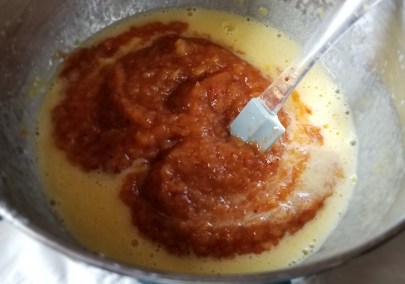
A really simple way to use cranberry sauce is to add it to a breakfast bread. This one is a healthy loaf, using whole wheat flour and flax seeds. You don’t need a lot of sugar, either, because there are sweeteners already in the sauce. As for the flax seeds, use a clean coffee grinder to grind it until you get a coarse powder. Enjoy!

Flax Seeds


Ground flax seeds

Cranberry Sauce-Walnut Bread
Print
Recipe type: Bread, Breakfast, Snack
Author: MizChef
A great way to use leftover cranberry sauce is in this healthy breakfast loaf.
Ingredients
  • 1 cup whole wheat flour
  • 1 cup all-purpose flour
  • 1 tablespoons flax seeds, ground
  • 2 tablespoons sugar or maple crystals
  • 1 teaspoon baking soda
  • ½ teaspoon ground cinnamon
  • ¼ teaspoon allspice
  • ¼ teaspoon nutmeg
  • 1/2 teaspoon salt
  • 2 large eggs
  • 3/4 cup buttermilk
  • ½ cup cranberry sauce
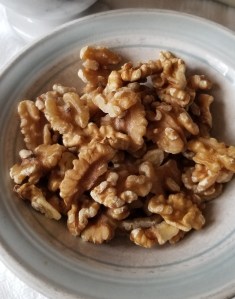
  • ½ cup chopped walnuts
Instructions
  1. Preheat oven to 375. Line an 8 x 4-inch loaf pan with parchment paper so that parchment sticks out of the sides (or grease it very well).
  2. In a medium bowl, whisk together flours, flax seeds, sugar, baking soda, cinnamon, allspice, nutmeg, and salt.
  3. In a small bowl, mix together eggs and buttermilk. Mix this into the flour mixture just until all dry ingredients are moistened. Stir in the walnuts. Swirl in the cranberry sauce, but don’t mix it in completely—you just want it to run through the batter.
  4. Spoon batter into loaf pan. Bake until lightly golden on top and a toothpick inserted in the center comes out fairly clean, about 20 to 25 minutes. Some moist cranberry on the toothpick is okay.
  5. Set pan on a wire rack to cool for 10 minutes. Turn loaf out onto the rack. Serve warm or cool completely.
Notes

Makes 1 (8 x 4) loaf.


Cranberry Sauce with a Sorghum Twist

Well, here we are again, preparing for that iconic American holiday, the Most Important Meal of the Year: Thanksgiving.

Every year, I make fresh cranberry sauce. Some people prefer the canned variety to freshly made, but when I see that gelled log with can rings around it, I can’t help but feel that I can do better. In fact, anyone can. Fresh cranberry sauce is extremely simple, and the end product is so much better than the canned log. (Although, I know some of you feel like it’s truly not a traditional Thanksgiving without that log with the rings around it, so I say, whatever floats your boat.)

Cranberries are a tart fruit and cranberry sauce requires plenty of sugar to make it palatable enough for most people. But I always cringe a little when I start dumping the amount of sugar that most recipes call for into my pot of cranberries. So, this year, I decided to try some of the sorghum molasses that I brought up from a trip to the South.

Cranberry Sauce with Sorghum

The recipe I’ve always used calls for 2 cups granulated sugar. That’s a lot of sugar. So, I started with 1 cup brown sugar. Brown sugar is a nicer product to use than granulated sugar because it lend the sauce a mellow molasses flavor and I think it thickens up the sauce  better. My sauce was still a little too tart, but I really didn’t want to add any more sugar, so I reached for the sorghum molasses. I started with 2 tablespoons and I liked the results. However, I knew that most people would want it sweeter (I don’t have a big sweet tooth), so I added 2 more tablespoons. It worked wonderfully.

Sorghum molasses is a Southern staple, but it can be found in specialty stores elsewhere in the U.S. If you can’t find it, substitute brown rice syrup, barley malt syrup, or honey (the honey will be sweeter than the other products).

If you’re looking for that cloying candy-sweet taste of canned cranberry sauce, this isn’t it. But if you want something that is fresh tasting, texturally pleasing (from all those bits of beautiful cranberries), and not as loaded with refined sugar as typical cranberry sauce, give this a try.


Cranberry Sauce with a Sorghum Twist
Print
Author: MizChef
Try this for a homemade cranberry sauce that cuts some of the usual refined sugar with sorghum molasse.
Ingredients
  • 1 16-oz. package fresh cranberries
  • 1 cup loosely packed brown sugar
  • ¼ cup sorghum molasses
  • 1 teaspoon grated orange zest
  • 1 teaspoon grated lemon zest
  • 1 cinnamon stick
  • ¼ teaspoon nutmeg or ground cloves
  • 1 whole star anise
  • Tiny pinch sea salt
Instructions
  1. Combine all ingredients with 1 ½ cups water in a 2-quart pot. Bring to a boil; lower the heat to low and simmer until cranberries start to pop. Continue simmering and stirring for about 5 minutes, smashing the cranberries along the sides of the pot (you can leave some whole). Taste and adjust sweetener level to your taste.
  2. Remove from heat and let cool. Transfer to a jar or bowl and refrigerate until needed. Remove the cinnamon stick and star anise before serving or use them for garnish.
Notes

Variation: Add a tablespoon of raspberry or cherry liqueur or ½ teaspoon vanilla extract.

Makes 3 cups.


Proud member of FoodBlogs
Advertisement
Archives
Categories