Archive for the ‘Recipes’ Category

posted by admin on Jan 13

Now that the holidays and special events (i.e., graduation) are over, I am doing a brief detox diet. It’s not one of those juice fasts or nothing-but-clear-broth fasts. It’s a liver cleanse, which I decided to do because a while back, my doctor said I had a slightly fatty liver. So now I’m trying to flush out the nasty stuff.

The diet is basically a 3-day course of a vegan diet. On the morning of the third day, I have to drink an elixir of lemon juice, crushed garlic, and olive oil, chased by fresh orange juice. (An alternative recipe is to blend 1 lemon (peeled) with 2 tbsp olive oil, and chase it with the orange juice.)

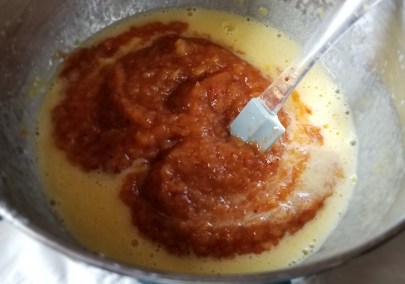
To get a jump start on the cleanse, though, I whipped up another concoction that is supposed to be good for the liver:  beet and apple juice. This basically consists of juiced beets and juiced green apple. However, because I don’t have a juicer, I had a little bit of an ordeal trying to get this juice done. First, I shredded the beets in a food processor, then transferred them to a blender, along with the apples. The blender apparently had an issue with this. That sucker was stubborn. It took a lot of futzing, prodding, and adding some liquid to get the thing going.

Unfortunately, because it’s a blender and not a juicer, it came out more like a beet smoothie than juice. It was quite thick.

Oh, to have a Vitamix! A Vitamix is a professional blender that can liquefy the hell out of a brick. So much can be done with a Vitamix: sauces, purees, juices, smoothies, etc. But, alas, I can’t afford one. They are super expensive, at an average cost of $500. So, this is one kitchen toy that will have to remain on my dream list.

Anyway, I hope this does the trick. Life is short. If you take care of your body, it will take care of you.

Peace.


posted by admin on Jan 11

With everything going on the past couple of months—school, internships, exams, Friday Night Dinner, graduation—I haven’t had time to reflect on the closing of a Brooklyn institution: Aunt Suzie’s Restaurant. Aunt Suzie’s restaurant has been around for 25 years, and for those of us who are very particular about Italian food, it has been a reliable go-to place where you could always count on getting a good, affordable Italian meal. Aunt Suzie’s closed their doors permanently on January 1, 2012.

Because I grew up on Italian food, I know what constitutes a good Italian meal. I know what quality is and what authentic is. And because I am somewhat of a food historian (that means I’ve read a lot about the history of food, not that I have a degree in it or anything), I also know why certain dishes exist, how they came to be. This all makes me very, very picky about Italian food. Given a choice, I almost never choose to go out to an Italian restaurant. Most of them fall short of my standards. The majority of Italian restaurants are cookie-cutter versions of what people think Italians restaurants should be. The menus rarely vary: chicken Francaise, veal parmigiana, spaghetti with meatballs (NOT an authentic dish, by the way), shrimp marinara, baked ziti, etc. Not that there’s anything wrong with these dishes. They are often made in Italian-American homes and they make great comfort food. But it’s always the same from restaurant to restaurant. What’s worse is that some restaurants don’t even do them well. When one stands out, I take notice.

This is changing, however. The draw of eateries accessorized by checkered tablecloths, Chianti bottles with candles stuck in them, and drawings of big, fat chefs with cheesy mustaches, and punctuated by squeeze-box music coming through the speakers, is weakening. More and more people are looking for authentic ethnic cuisines, and ristorantes that boast authentic Italian cuisine are popping up all over the place with the mission of showing Americans what eating in Italy is really like. Some places shoot for gourmet Italian. Babbo, for example, Mario Batali’s eatery in Greenwich Village, showcases high-end, off-the-grid Italian food, such as Pig Foot “Milanese,” Chianti Stained Pappardelle with Wild Boar Ragu, and Deconstructed Osso Buco for Two with Saffron Orzo, Cavolo Nero and Chestnut Gremolata for a hefty $75. These types of places are where one goes for an “experience.”

Then there are places like Aunt Suzie’s, which offer more than the typical cookie-cutter menus but whose dishes are recognizable and agreeable to most people’s palates. These are the places one goes to for a good meal in comfortable setting. Aunt Suzie’s had the usual stuff that people expect, such as eggplant parmigiana and chicken marsala, but then there were the “outside the box” menu items that really highlighted the diversity of Italian cuisine. I’m not talking about anything that was especially unique to Aunt Suzie’s but that are unique to restaurants that want to offer something more.

For example, caponata is a pretty typical Italian appetizer, yet not many Italian restaurants have it on their menus. Aunt Suzie’s had it. Caponata is a sweet and sour relish-like dish that goes beautifully on crostini or focaccia. (Below is my recipe for caponata, as it appears in my cookbook, What, No Meat? Traditional Italian Cooking the Vegetarian Way.) They also offered dishes such as Salmon in Vodka Sauce, Brandy Orange Chicken, and Fresh Spinach Fettuccine in a tomato-mushroom sauce. One of my favorite items was the Honey Roasted Pear, Goat Cheese, and Walnut Salad served over mixed greens. This salad was sprinkled with toasted pine nuts and dressed with a light vinaigrette and was utterly divine.

One of the best things they offered was a plate of roasted pepper dip on the table with a variety of fresh breads. This stuff was addictive. The last time I was there was for a friend’s birthday and someone else at the table told me that I should buy the restaurant. I proclaimed that the only reason she wanted me to do that was so that I could keep the roasted red pepper dip coming. But I don’t have to go to that extreme—I got the recipe. HA! Well, the basic ingredients, anyway. I’ll be working on that.

I was never crazy about their style of service where plating was concerned, though. They often put sides, especially vegetables, in a separate plate, which always strikes me as cafeteria-style service. And they never took reservations, which was frustrating when someone wanted to plan and event (a birthday, anniversary, etc.) because you never knew how long you’d have to wait. Other than that, I really don’t have anything bad to say about the place. The servers were usually friendly and the portions were more than satisfying. Although I will say that a friend complained that the last couple of times that they ordered pasta, it was overcooked. Since I rarely order pasta in a restaurant (homemade “pillows” at Lidia’s Felidia being an example exception), I have no opinion on the matter.

Well, goodbye to Aunt Suzie’s. You will be missed.

Thank god L&B Spumoni Gardens is still around.

Caponata

Copyright © Roberta Roberti. All rights reserved.

3/4 cup olive oil
1 cup chopped onion
½ cup sliced celery
1 cup chopped fresh fennel
2 large garlic cloves, minced
1 small eggplant (about 1 pound), diced
3 small zucchini, scraped and diced
1 cup sliced mushrooms
2 large tomatoes, peeled, seeded, and diced
½ cup pimento olives, sliced
½ cup balsamic vinegar
3 teaspoons sugar
2 teaspoons salt
1/4 teaspoon black pepper

Heat the oil in a large pan over medium heat. Add the onion, celery, fennel, and garlic and sauté, stirring occasionally, until they are tender, about 7 to 10 minutes. Add the eggplant, zucchini, and mushrooms; cover the pan and cook until the vegetables are tender, about 10 minutes.

Add the tomatoes, olives, vinegar, sugar, salt, and pepper. Reduce the heat to low; cover the pan again and simmer 5 minutes. Increase the heat to high and bring the mixture to a boil. Remove it from the heat.

Transfer the mixture into a large bowl; cover and refrigerate until the caponata is thoroughly chilled, at least 3 hours. Allow it to come to room temperature before serving.

Store the caponata in a covered bowl (not aluminum) or plastic container in the refrigerator up to one week.

Makes 10 to 12 servings.

IDEA: For a more authentic Sicilian version, add about 2 tablespoons cocoa powder to the vegetables during cooking for a thick, dark, and slightly sweet delicacy.


posted by admin on Jan 2

Hi, everyone. Since I’ve been in cooking school, I haven’t had much time to cook at home (ironically).  The most I’ve been able to do throughout the course of the year is throw a bunch of vegetables together in a pot to make a chili, stew, or soup, or in a pan for the occasional frittata, and once or twice, I whipped up a batter for some muffins.

Millet cooling

It’s now January 2, 2012. Classes are almost over (I have my last one on the 4th), exams are behind me, and my Friday Night Dinner is just a memory now. And because of the holiday weekends, I’ve been able to make a few things, like the New Year’s Red Quinoa & Black-Eyed Peas Salad.

It’s getting mighty cold here in New York, so I decided that I should make some soup today. I started with homemade vegetable stock, then made the soup with scallions, garlic, zucchini, carrots, plum tomatoes, peas, and black-eyed peas. Toward the end, I added some minced parsley, which gave it a nice, fresh, “green” flavor. I ladled some in a bowl, then I threw in some separately cooked noodles for good measure.

Getting ready for the oven

To accompany my soup, I also made baked millet croquettes, a recipe I got from the Natural Gourmet Institute. Millet is a whole grain that has been used since antiquity.  It’s a staple grain in many countries, but until recently, you would most likely find millet in the U.S. in bird seed. Millet is a good source of magnesium, as well as phosphorus and manganese. In fact, 1 cup cooked millet provides 19% RDA of magnesium and 17% of phosphorus. Millet is recommended in our diets for heart health, the development and repair of body tissue, and to help prevent against diabetes, breast cancer, and asthma.

These croquettes are a nice way to use millet and they make a good party food. So here’s the recipe, which I’ve adapted from the original NGI version. Aside from being completely vegetarian and vegan, if you use tamari instead of shoyu, it's completely gluten free, too. Enjoy!

Baked Millet Croquettes

Done croquettes!

1 cup millet
2 cups water*
½ tsp salt
½ cup sunflower seeds, toasted**
1/2 bunch scallions, minced
½ bunch parsley, minced
1 small carrot, finely grated
2-4 tbs shoyu or tamari

  1. Wash millet in sieve. Drain well. In saucepot, dry roast over medium heat, stirring constantly for about 10 minutes or until millet starts to smell nutty.
  2. Add water and salt to millet and bring to a bowl. Simmer 30 minutes until water is absorbed. Cool millet in large bowl.
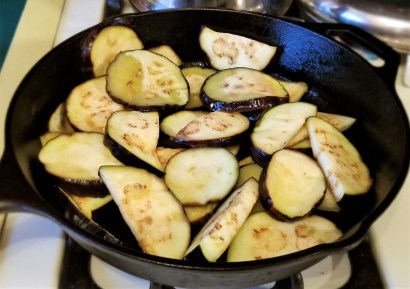
  3. Grind sunflower seeds in food processor. Add to millet, along with scallions, parsley, and carrots. Add shoyu to taste, and squeeze mixture together with hands until soft and sticky. If the croquettes don’t stick together, add a little water to the mixture, just enough to make it stickier.
  4. Form into croquettes and bake on greased cookie sheet or parchment paper until golden brown, about 30 minutes.

* I prefer to cook the millet in vegetable stock for a better flavor.

** The sunflower seeds give the croquettes a discernible crunch; if you prefer a smoother mouth feel, omit the sunflower seeds.


posted by admin on Jan 1

Happy New Year, everyone! Around the world, different people have their own traditions and rituals for ringing in the New Year. And food always plays a part.

For example, in Japan, it is customary to eat soba noodles during the New Year’s celebration to ensure a long life. In many Latin American countries, as well as Spain, 12 grapes are eaten—1 for each month—and it is hoped that the grapes are sweet as a harbinger of a sweet year ahead. In many countries, legumes are popular for New Year’s because they swell when cooked, symbolizing increased financial prosperity. Lentils, particularly, are used in Italy and Brazil.

In the United States, black-eyed peas are popular (the band and the legume) and Hoppin’ John is a staple New Year’s dish in the South. I made my own black-eyed peas dish incorporating the healthy grain quinoa. And to make it more festive, I used red quinoa. So, here’s the recipe for my New Year’s Red Quinoa and Black-Eyed Peas Salad. Enjoy.


New Year’s Red Quinoa and Black-Eyed Peas Salad

1 1/2 cups red or white quinoa, rinsed
2 3/4 cups vegetable stock
2 cups cooked black-eyed peas
1 1/2 cups chopped bell peppers, mixed colors
5 scallions, thinly sliced
1 Haas avocado, cut into small dice
1/4 finely chopped fresh Italian parsley

Dressing:
1/4 cup extra virgin olive oil
2 tbsp balsamic vinegar
1 tbsp flavored mustard
salt and pepper to taste

1. Cook the quinoa in the vegetable stock until liquid has been absorbed and grains are tender. Transfer to a large bowl and let cool.

2. When quinoa has cooled, add remaining ingredients (except dressing).

3. Whisk together the dressing ingredients and pour over salad. Mix well and adjust seasoning as desired. If it’s dry, add more oil a little at a time and mix well.

posted by admin on Jan 1

We had our next to last class at the Natural Gourmet Institute—Indian cuisine. It was an amazing feast filled with beautiful, deeply flavored dishes.

chicken tandoori

First, we had the usual lecture to introduce us to the cuisine of India and how it varies from region to region, and we were introduced to some of the common elements, seasonings, and utensils of Indian cooking. Indian cuisine has evolved over thousands of years and influenced by many cultures that passed through the country.

The most common seasonings used are black mustard seeds, chiles, cumin, cardamom, fennel, coriander, turmeric, coriander, and fenugreek. Common herbs are cilantro, kaffir lime leaves, curry leaves, and mint.

Vegetable Curry

The nice thing about Indian food is that it’s great for vegetarians. Thanks to Buddhism, Hinduism, and Janism, vegetarianism is commonplace throughout the country and anywhere one goes in India, a vegetarian will always find plenty to eat.

India has a very distinct flavor profile—complex flavors and lots of spices—but it is similar to other countries in that the use of spices and heat levels vary from region to region. The more south you go, the hotter the food, which is the same way it is in Italy, the U.S., and many other countries. That’s because the more south you go, the hotter it is and eating spicy foods make you sweat, which cools you off. See, it all makes sense.

For the class, we concentrated on Moghul (or Mughlai) cuisine, which is the upscale Northern Indian cuisine that is most commonly found in Indian restaurants in the Western world. The Moghul Empire in India was extremely influential in many areas. This is from Cuisinenet.com:

The Moghuls were Persian Muslim princes, descended from both Genghis Khan and Tamburlaine, and nothing they did was anything less than glorious. They built the lavish and ambitious palace fortresses, mosques, and tombs that have become emblematic of the country, the most famous example of which is the Taj Mahal, the tomb built by Shah Jahan to honor his favorite wife, Mumtaz Mahal. At its height, the Moghul dynasty was known for its cultured tolerance, even enthusiastic support of and participation in, local customs, arts, and religions.

Chapati

This lavishness extended to food as well, and to this day, Northern Indian cuisine reigns as the standard Indian cuisine.

So, we spent the next few hours cooking dal, vegetable biriyani, golden cabbage, vegetable curry, spiced spinach and mushrooms, spiced chickpeas, sambaar, dosai, masala dosais filling, raisin tamarind sauce, pakoras, mint relish, cucumber raita, cilantro-onion relish, chicken tandoori, chapati, almond milk fudge, firni, chai tea, and mango punch.

Makind Dosai

I made the cucumber raita and cilantro-onion relish and tried my hand at a dosa, which is like a crepe. It’s filled with various ingredients, or it’s rolled up and used much like we would use bread. Learning to make dosai is a tricky thing—you have to make the batter the right consistency, then spread it in a pan with a ladle-like spoon (they have a special utensil just to do this) to the proper thickness, then flip it over. In between dosas, we greased the pan with an onion half dipped in oil for extra flavor.

I think my favorite dish of the day was the spiced chickpeas.

Dosai

And because it’s one of the easiest Indian dishes to make, I’m offering you the recipe below.  Enjoy!

Note: If you don’t have a pressure cooker, you can cook the chickpeas in a pot. If you don’t want to make chickpeas from scratch, use two 15- or 16-oz. cans.

Cilantro-Onions Relish


Spiced Chickpeas

Copyright ©Jenny Matthau/NGI

2 cups chickpeas, soaked and drained
6 large tomatoes, peeled, seeded* and chopped
6 tbsp coconut oil
2 onions, cut into small dice
6 garlic cloves, minced
1 tsp turmeric
1 large pinch cayenne
½ tsp ground cumin
½ tsp cinnamon
¼ tsp ground cloves
Salt
½ cup bean liquid
2 tbsp lemon juice
1 bunch cilantro, minced

  1. Rinse chickpeas thoroughly and place in pressure cooker with 2 inches of water to cover. Bring to full pressure, lower heat and cook for 30 minutes or until very soft. Reserve bean liquid.
  2. Fry onion in oil until soft.
  3. Add garlic and spices. Cook a few more minutes
  4. Add tomatoes, tomato juice and salt. Cook for 5 minutes.
  5. Add chickpeas and bean liquid. Simmer, covered for 15 minutes.
  6. Remove cover and cook on medium flame until thickened, if too thin.
  7. Remove from heat. Stir in lemon juice and cilantro.

* Press seeds through a sieve and reserve the juice; discard seeds.

Spiced chickpeas


posted by admin on Dec 28

On Thursday, December 25, my FND team began preparations for our Friday Night Dinner at The Natural Gourmet Institute. We arrived in Kitchen 3 at 4:30 p.m. and had a huddle. We needed to prep the various components of the appetizer, main, and dessert courses. The main entrée, a Peruvian causa, alone involved 4 separate elements.

Causa is a Peruvian potato cake with several different layers. Traditionally, this dish would have layers of meat, seafood, eggs, vegetables, or other combinations, but always, there a potato layer.  For our version, we had 4 layers:  purple potatoes, cauliflower and almond, pureed fava beans, and seasoned tempeh.

Everything  that needed to be done was written on the board. We then broke up into teams and divvied up the tasks.  As expected, it fell to me to prepare the potatoes for the causa. I’d been responsible for that layer all along, so it made sense that I took ownership of it during FND prep.

We had prepared the entire dinner for 10 people a couple of times, but this time, we were making it for 100 people. Boiling and milling 4 lbs. of potatoes is one thing; boiling and milling 40 pounds is another. I filled three huge pots with purple potatoes and because the potatoes were all different sizes, they cooked at different rates. I tried grouping similar sizes in each pot, but still some potatoes cooked faster than other within the same pot. This meant that I had to skewer test and scoop out potatoes at intervals. Which was just as well because there was no way that I would have been able to pick up and drain these commercial-sized pots of boiling potatoes! If I had tried, it would have been a disaster of monstrous proportions. And I probably would have landed in the burn unit.

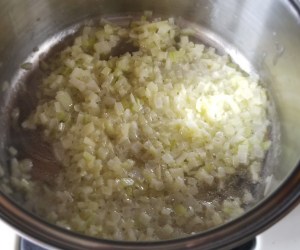
Lots of onions

It took hours to peel and mill all of these potatoes, even when one of my classmates stepped in to help me peel. My arms got an incredible workout. After several hours, I needed a break and asked one of my other classmates—who was actually on the other FND team, but was there to help us out—took over the milling for about an hour.

When I was finally done milling, the other elements for the causa were just about ready, too. But we had issues with the other elements. We had started out with a lima bean puree but at some point, we switched to fava beans (I’m still not quite sure why). To our dismay, the fava bean puree was not as green as the lima bean puree had been, probably because we didn’t have enough parsley, and the minced rosemary that had been added to it was too overpowering. Fortunately, we had enough color on the plate to compensate for the bean puree’s dullness, and the rosemary flavor was tempered when the puree was combined with the other elements. To ensure that all the elements worked together, we took scoops of each layer and placed them in a bowl to taste. (We learned to do that after the last run-through because, as we discovered, each element on its own may have been perfect, but together with other elements, it may have not have been quite right, and vice versa.) We continually adjusted until we felt everything worked, except that the cauliflower remained a little crumbly.

Elyse, who had made the bean puree and was disappointed, wanted to cut out the puree and just do three layers, but I knew that this was a bad idea. We had tried the recipe 3 times using 4 layers and it might have been disastrous to use just 3, because the cauliflower was too crumbly and it needed the puree to adhere it to the causa. With tout the bean puree, it would have been a mess.

We layered 6 full-size hotel pans with the 4 elements and wrapped them up. The next day, we inverted them onto sheet pans and began cutting the portions. This was not as easy as it sounds. We had to make sure that all the portions were the same size in both width and height. We tried cutting straight down, with a sawing motion, with knives with teeth, knives with no teeth, dental floss, and bench scrapers. Despite our best efforts, we wound up with a lot of oddly shaped pieces. Fortunately, we had a lot to spare to make up for the discards.

The next problem to solve was how to serve them. We had settled on squares but now we went back to triangles, which we had abandoned during our last run-through because we felt that triangles would be too unstable. Then, as we cut the squares into triangles and tried to move them to sheet pans, we saw how fragile they were. Through a couple of hours of trial and error, we discovered that the pieces stayed together a little better if we put them on the sheet pans and heated them upside down—that is, with the almond side down. It seemed to compact that layer just enough that we could handle them. Of course, had we known we were going to do this, we would have layered the 4 elements in reverse order.

The next day was a flurry of activity in K3 as we began preparation for service. I took it upon myself to start assigning stations for everyone on the line. Then, it was time for service. We all took our positions and began plating. Would you be surprised if I told you that we had a little bit of a rough time plating the causa?

We fiddled and fudged with a couple, trying to get a feel for the pieces. We finally worked it out that I would lay down one piece and Elyse, across from me, would lay down the other piece, the triangle that would stand up. At that point, things started moving. We got those causas plated and moved them down the line for the rest of the components.

We hit a bump in road, though. We had marked certain sheet trays to keep for the” house” (i.e., for ourselves), as they were the least pretty of the batch, the ones that had crumbled or that were oddly cut. Somehow or other, a couple of these trays got pulled out before the “good” ones. When we realized the error, we popped the good ones in the oven, but the plating came to standstill while we waited for the good ones to heat up. Chef B told us that we needed to get more plates out and so we had no choice but to pull the scruffy ones together and do the best we could with them. Finally, the good ones were hot, and just when we had pulled them from the ovens, Chef B said, “Stop.” We were done. All the guests had been served. And we all groaned with a great big old “Damn it” in our voices.

In the end, it was okay because no out in the dining rooms knew the difference. All they saw was a beautifully arranged meal bursting with color and form and texture, and when they tasted it, regardless of how it looked, it was rich with complex flavors.

We also took some time to decorate the classrooms with garland, lights, and flowers. My classmate, Angie, sewed table runners and made tassels for the menus, Elyse took charge of the decorations, and I created the menu. There was a lot to be done and tensions had run pretty high as everyone struggled to make time to work on FND while still carrying on their daily lives. But we pulled it all together and we had one hell of dinner.

My brother and sister-in-law were there, as well as numerous friends and acquaintances, and I was so happy to see them all there. With the exception of one person, everyone enjoyed the dinner very much. Success!

It sucked when the next day, one of the instructors said that after dinner, she became violently ill, but since no one else had that effect, I chalked it up to some weirdness with her stomach only.

I won’t lie. It was a bitch to plate those causas, but I am very proud of my team. We created a great meal and pulled it off despite bumps along the way. As we walked out into the dining rooms for our bows, we all held our heads high for a job well done.

For some fabulous photos of the prep and dinner by my classmate Elyse’s husband, David Prince, click HERE.

And for some less than spectacular, but still nice photos by me, click HERE.

By the way, the meal was entirely vegan and gluten free. The menu is below, as well as a recipe for Quinoa Croquettes, which got raves.

Thanks to Chef Barbara, the students of CTP 197W, the kitchens assistants, and all the guests who helped make our Friday Night Dinner a memorable night.

 Menu

Appetizer
Vegetarian Ceviche
Buttercup Squash Soup
Quinoa Croquettes with
Pumpkin Seed-Almond Dip

 Entrée
Causa
Escarole with Garlic & Lemon Dressing,
Botija Olives, and Caramelized Pearl Onions
Salsa Verde and Smoky Tomato Sauce

 Dessert
Chocolate Turrón
Tamarind Ice Cream
Saffron Poached Seckel Pear

QUINOA CROQUETTE

Yield: 10 two-ounce servings

Ingredients:

¾ cup quinoa (combination of red and white), rinsed well
1 1/8 cup water
2 medium parsnips, large dice (¾ cup)
1/2  onion, medium dice (½ cup)
2 cloves garlic, fine mince
1 tablespoon EVOO
½ cup cooked lima beans (1/4 cup unsoaked)
¼ bunch parsley, fine chopped (1/6 cup)
2 scallions, thin slice
1/4 cup sunflower seeds, lightly toasted and coarse chopped
1/2 teaspoon oregano
½ teaspoon ground cumin
½ lime, juiced
1 teaspoon sea salt
Oil for frying

Procedure:

  1. Cook quinoa with water.  Cool.
  2. Cook parsnips until very soft.
  3. Sauté onion and garlic in EVOO until soft.
  4. Blend together parsnips, lima beans, parsley, scallions, sunflower seeds, oregano, cumin, lime juice and salt to form a paste.
  5. In a large bowl gently stir quinoa and onions and garlic together with paste mixture.  Quinoa may be fragile so do not over mix.
  6. Form into 2 ounce croquettes.  Pan fry in oil.

PHOTO: David Prince


posted by admin on Dec 5

We’ve been in the thick of the food and wellness portion of our program at the Natural

Squash-Sea Vegetable Salad

Gourmet Institute. I don’t know whether other cooking schools have anything like this, but I don’t think so. This is what sets NGI apart from other schools: Its focus on health-supportive cooking. And part of that is understanding various diets and lifestyle programs/principles (for lack of a better way of putting it), such as Macrobiotics and Aryuveda.

Summer Squash with Pesto

We’ve also learned about food and healing for specific illnesses, such as heart disease and cancer, and for keeping the immune system strong, and a couple of weeks ago, we had a cleanse and detox class. This class discussed the digestive system, specifically the kidneys, liver, and colon, and how to cleanse toxins from them.

This week, we had another detox class, except that this time it was “living foods”—i.e., raw foods. We prepared and ate numerous dishes that were completely raw, and it was surprisingly filling and satisfying. We had:

Sweet Potato Pie

Filbert Sweet Milk
Vegetable Soup
Mixed Nut and Vegetable Pate
Jicama Salad
Cinnamon Beets
Squash-Sea Vegetable Salad
Summer Squash with Pesto
Sweet Potato Pie with Cashew Nut Cream
Sunflower Spread
Raw Chocolate Brownie


Sunflower Pate

We started the meal with a shot of wheatgrass-apple juice. When they hear “wheatgrass,” most people think of 1970s hippies living in communes and subsisting on alfalfa sprouts and brown rice. But wheatgrass has so many health benefits, such as helping acne and skin problems, reducing inflammation, and aiding digestion. Its shining quality is that it contains chlorophyll. In fact, wheatgrass is the best living source of chlorophyll, and the health benefits are extensive.

Wheatgrass does not exactly make people go “Mmm, mmm!” but when combined with freshly juiced apples, as we had it, it’s actually quite tasty. We also had homemade kefir, which I can’t honestly say I was crazy about. It had a funky, bad-cheese flavor to it. But some people like that, and to those who do, more power to you.

Mixed Nuts Vegetable Pate

Personally, I would never be able to survive on a raw foods diet (not happily, anyway). I need hot foods, especially in winter. Can you imagine going home at the end of a dark, dreary, freezing winter day and having all cold, raw foods? As delicious as they might be, I would not feel satisfied. In fact, when I got home after class, I had the urge to have a bowl of hot soup. Which I did. And I was happy.

But a raw food diet is a great way to detox, particularly if you’ve gone through a heavy eating period, or a “bad-food” period. On a temporary basis, it wouldn’t be so bad. If you’re interested in giving it a try, here’s a simple recipe for Cinnamon Beets to try. Adjust the seasonings until it’s to your liking. Enjoy.


Cinnamon Beets

Cinnamon Beets

Adapted from Dining in the Raw: cooking with “the Buff” by Rita Romano

Makes 4 servings

2 medium beets, peeled
½ teaspoon cinnamon
1 tablespoon tahini
Juice form 1 orange
1 ½ tablespoons Nama shoyu*
ginger juice**
splash lemon juice
salt

  1. Make long strands of “angel hair” by putting beets through a spriralizer. [If you don’t have one of these, just grate the beets using the large holes of a box grater.]
  2. Blend cinnamon, tahini, orange juice, and shoyu, along with ginger juice, lemon juice and salt to taste. Pour dressing over beets. Let sit 1 hour and drain well before serving.

Note: For a different taste, substitute one teaspoon chives for the cinnamon and add one teaspoon dry mustard.

*Nama shoyu is unpasteurized shoyu, available in health food stores.

**Make ginger juice by grating fresh ginger and squeezing it in cheese cloth.

posted by admin on Nov 22

Hi, all. I spent the better part of the morning today helping to hand out turkey dinners–with gravy, potatoes, stuffing, yams, apple juice, and canned veggies)–to needy people in the community of Elmhurst, Queens. This is something that my place of business does every year and it fell to me to organize all the families who were on the list to receive the dinners.

It was kind of frustrating because in order to have everything go smoothly, I required the cooperation of my co-workers, and that didn’t happen. It’s not that they were being deliberately uncooperative, but they just sort of did their own thing without checking with me.

Anyway, in the end, the important thing was that 75 families are going to have a decent Thanksgiving meal this year. And it made me realize that Thanksgiving is only 2 days away! So, if you’re still looking for some good recipes, here are some that will make your Turkey Day feast one to remember. Happy Thanksgiving, everyone. May you have a happy, healthy one and, if you’re traveling, get to your destination safely.

www.thepartyanimal-blog.org

Spinach, Red Pepper, and Feta Quiche From Gourmet, March 1994

Brussels Sprouts Gratin from Food Network


Vegetarian Gravy from NPR

Chestnut Stuffing from Gourmet

Homemade Cranberry Sauce, plus 10 Things to do with Leftover Cranberry Sauce

Whole Wheat Bread Rolls from Foodista.com

Apple Galette with Vegan Crust


posted by admin on Oct 23

Oatmeal Dulse Crackers

I love buffets. You can choose exactly what you want and, sometimes, how much of it. And buffets are very much a social affair. You have to get in line with a bunch of other people, which encourages verbal interaction (“Oo, doesn’t that look good?” “Hey, what’s that?” “I had that earlier. It’s delicious!”), and often share tables with others. And no one goes to a buffet by themselves.

Buffets are also fun for the cook. Over the years, I’ve hosted many parties and they were often buffets. Buffets allowed me to cook multiple dishes and try out all kinds of new things. In fact, they were the perfect vehicles for testing out recipes for my cookbooks. I could put out 10 seemingly disparate dishes across the table and guests could try what they wanted and leave what they didn’t.

Salmon mummy

It also made things easier for me in terms of serving. I just put everything out and that was that. I might have to refresh some things or make some last-minute preparations in the kitchen, but for the most part, once everything was on the table, I could sit and enjoy my friends while they enjoyed my food.

Finished Salmon

So, my class at the Natural Gourmet Institute had their mandatory buffet and it was great! Family and friends of the students gathered to enjoy the various offerings and from all accounts, they had an excellent meal.

Grilled Asparagus

We received a menu that we had to follow, but we improvised here and there. We got a huge box of figs and one of my classmates roasted them and sprinkled parmigiano over them. We added that to our dessert menu. I was in charge of the Apple Oat Crumble, which we piled into martini glasses, and I placed a fig in each one, which not only looked beautiful but it elevated a simple, rustic dessert to something more gourmet.

But, of course, it wasn’t all strawberries and cream. Some things posed challenges, such as preparing a whole poached salmon for service, which required carefully scraping this gray layer just below the skin without ripping the fish. And, once again, I knocked something over, eliciting a solid curse from me. The same dishwashers who had witnessed my crêpe batter disaster saw this, too. I’m sure they have labeled me the year’s biggest klutz.

Baklava

Apple Crumble

Anyway, here’s my class’s menu. I also made the quinoa salad, so below is the basic recipe with my modifications. It’s incredibly easy to make but the results are so good.

All the photos in this blog are by my classmate, Barbara Vadnais (thanks, Babs). The thing that looks like a mummy is the salmon, which we wrapped in cheesecloth to flip it over after it had been poached.


CTP 197 Buffet Menu

Cream of Mushroom Soup
Whole Poached Norwegian Salmon
Cucumber Citrus Salsa
Grilled Asparagus
Lemon Dill Mayonnaise
Tempeh Scaloppine
Chicken with 40 Cloves of Garlic
Rice Pilaf
Herbed Quinoa
Vegan Caesar Salad with homemade croutons
Red Lentil Pâté
Hashed Brussels Sprouts with Carrots and Poppy Seeds
Oatmeal Dulse Crackers
Vegan Baklava
Apple Oat Crumble with Pomegranate Reduction
Roasted Figs with Parmigiano


Herbed Quinoa

1 cup quinoa
1 ¾ cups boiling water
¼ to ½ tsp salt
1 tablespoon fresh tarragon, chopped
2 tablespoons basil, parsley, thyme, or other herbs of your choice
1 to 2 tablespoons olive oil

  1. Wash and toast quinoa in a small saucepan. Over high heat, stirring constantly, until it smells nutty and browns lightly (5-7 minutes).
  2. Remove quinoa from heat. Add boiling water and salt. Bring back to a boil, stirring. Lower heat and simmer, covered, for 15 minutes or until quinoa is cooked and all liquid is absorbed.
  3. Fluff with a fork and add tarragon and other herbs before serving.
  4. Add olive oil, a little at a time, just until quinoa is moistened. Adjust seasoning as needed.Yield: 6 servings

posted by admin on Sep 19

Hi, all. We’re entering autumn (a hell of a lot sooner than anyone anticipated), and for food lovers, that means so many wonderful, delicious things: root vegetable gratins, hearty soups, pumpkin and other squashes, and apples.

Apples are a culinary treasure because they can be consumed raw, cooked in both sweet and savory dishes, and as beverages. They’re so versatile that almost any kind of dish can be prepared with them. They give butternut squash soup a slightly sweet edge, provide cakes with moisture while making them lower in fat, and give meat dishes more complexity.

Although apples are not native to the New World, they have become a staple of American farms across the United States and are ranked in the top 20 crops in the U.S. Although there are more than 7500 varieties of apples worldwide, most of them are not available commercially. Many are wild varieties or varieties that grow on people’s private properties.

So, to usher in autumn and glory in the abundance of apples, here are some recipe links for apple dishes.

Here’s my apple galette that I made in school: Apple Galette with Vegan Crust

Apple Strudel from the Food Network: Apple Strudel

Apple Pie and Apple Pecan Pie: Apples!

And some more great recipes from:

New York Apple Country

Virginia Apples

Eating Well


Fatal error: Call to undefined function body_out() in /home/andimarq99/www.mizchef.com/wp-content/themes/cooking-blog-theme/archive.php on line 74