Do you still have cranberry sauce left over after the holidays? I know some of you do. Admit it. You’ll see lots of sites and professional chefs telling you that everything should be thrown out three days after the holiday. I have news for you—if you’ve stored it properly, that cranberry sauce is probably still good. The thing is, because of the sugar content, cranberry sauce has a long shelf life. It’s just like a jar of jam or preserves in your refrigerator. (Of course, if it smells or tastes funny, or if it has mold on it, throw it out.) For those of you who prefer the stuff that comes in cans (you can admit that, too, don’t be ashamed), you can use those up as well, so that they don’t sit in your pantry for another year.
There are many things you can do with leftover cranberry sauce. One way to use it up is to make a dressing with it, and I’ve done just that. I paired homemade cranberry sauce here with baby greens and Anjou pears. So that the cranberry doesn’t overwhelm the delicate ingredients, I strained the dressing.
So, why not start out with plain cranberry sauce (such as what comes in a can) instead of whole berry sauce, you ask. Because I think that whole berry sauce has so much more depth of flavor than flat cranberry sauce. Plus, chances are that if you have a significant amount left over, it’s probably the homemade kind, which is most likely going to be chunky.
You can adjust the recipe to any flavor profile you like. Enjoy!
Cranberry Sauce Vinaigrette
Makes ¾ cup dressing.
1 cup whole berry cranberry sauce 2 tablespoons balsamic vinegar 1 teaspoon stone-ground mustard 1 teaspoon sea salt Freshly ground pepper to taste
3 tablespoons extra virgin olive oil
In a medium bowl, combine the cranberry sauce, balsamic vinegar, mustard, salt, pepper, and ¼ cup water. Drizzle in the oil and whisk together well. Using a rubber spatula, strain the dressing through a mesh strainer into another bowl. Taste for seasoning and adjust if you like.
Pear-Pignoli Salad with Cranberry Sauce Vinaigrette
Makes 4 servings.
2 Anjou pears (ripe but still firm) 6 oz. mixed baby greens ¼ cup pignoli (pine nuts), toasted ¼ cup Cranberry Sauce Vinaigrette 2 tablespoons black sesame seeds
Slice the pears about ¼ inch thick. You want them somewhat thin, but not so thin that they fall apart in the salad. Place them in a large bowl. Add the greens and pignoli and toss gently. Add the dressing and again toss gently. Transfer the salad to a serving platter and arrange neatly. Sprinkle the sesame seeds over the top.
Hello, everyone! As we approach the end of another year, many cultures around the world begin their preparations for carrying out traditions that will ensure good luck, good health, and prosperity in the new year (at the very least, they can’t hurt). Food always—pretty much without exception—plays a part in these rituals.
Soba Noodles
In Japan, for example, it is customary to eat soba noodles during the New Year’s celebration to ensure a long life, symbolized by the long noodles. In Spain, 12 grapes are eaten at midnight on New Year’s Eve—one for each month of the year—and it is hoped that the grapes are sweet, which is considered a harbinger of a sweet year ahead. In Austria and Germany, they eat little marzipan pigs, which are considered good luck. In the Philippines, they make a lot of noise on New Year’s Eve, banging pots and pans, to ward off evil spirits. In Greece, they smash a pomegranate at the front door to spill the seeds, symbolically spreading wealth.
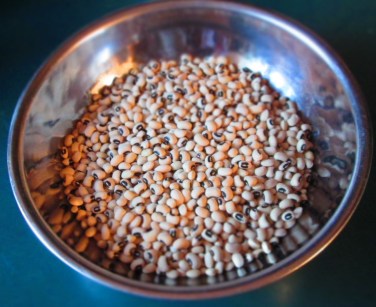
In many countries, legumes are popular for New Year’s because they swell when cooked, symbolizing increased financial prosperity. Lentils are used in Italy and Brazil because they are round like coins. In the United States, black-eyed peas are popular (the musical group and the legume) and Hoppin’ John, which features that particular legume, is a staple New Year’s dish in the South.
Recipes for Hoppin’ John first began appearing in cookbooks in the 1840s, but the origins are a little murky, and possibly a little unfortunate. Black-eyed peas are native to West Africa, and it’s believed that they were brought over by slave traders as part of their cargo. Naturally, the crops were planted in the South, and became an important commodity. Some believe that eating black-eyed peas for New Year’s is actually a carryover of a 1500-year-old tradition of consuming them by Sephardic Jews on Rosh Hashanah, the Jewish New Year.
The beans themselves represent coins, and there’s one version of this tradition that calls for hiding an actual coin in the Hoppin’ John—bringing the finder good luck—as well as filling a bowl with beans and coins and leaving it on the table for some benevolent spirit in exchange for granting good fortune.
But why is it called Hoppin’ John? There are several stories. One says that there was an old man who hobbled around and sold peas on the streets of Charleston, and the dish was named after him. Another says that children would hop around the dinner table, eagerly anticipating the serving of this dish. A more likely story is that it comes from a French term, pois pigeons, meaning pigeon peas, which are a big part of Caribbean culture.
Hoppin’ John is traditionally made with pork and served with rice. In many countries, pork, for some reason, is considered lucky to eat on New Year’s (marzipan is not the only kind of pig that Austrians and Germans eat for New Year’s). Rice flourished in the hot, steamy South (it was dubbed at one point Carolina Gold). Bring all three of these elements together, you’ve got one lucky dish. Also, Hoppin’ John is often served together with collard greens, because it represents money. Cornbread, too, is considered lucky because of its “golden” color (you get the idea).
I’ve made different versions of Hoppin’ John, with and without greens, with and without meat, with rice and with other grains… This is probably the simplest version I’ve cooked. The nice thing about it is that you can make it ahead of time and freeze it, then defrost it in time for New Year’s Day. By the way, unlike other dried beans, black-eyed peas do not need to be pre-soaked. You can, if you want to cut down cooking time, do a quick-soak method by bringing the peas to a boil in a pot of water, letting them boil for 2 minutes, then letting them sit in the water for an hour off heat. But, frankly, if you’re going to do all of that, you’re not really saving any time, unless you want to do this the day before. In my opinion, not worth it. Just let the Hoppin’ John cook for an hour, and it’s a done deal.
Whatever traditions you have for New Year’s—or whether you have any at all—I’m wishing you all a healthy, happy, prosperous New Year. I wish for peace and tranquility, honor and compassion, and above all, respect for all living beings.
Hoppin’ John
Makes 6 servings.
1 tablespoon olive oil 1 medium red onion, chopped 1 tablespoon kosher salt 4 garlic cloves, minced
1 tablespoon tomato paste 6 cups vegetable broth 1 small green bell pepper, chopped 1 cup coarsely chopped carrot 2 large celery ribs, chopped 1 cup chopped tomatoes, liquid reserved 3 cups dried black-eyed peas 1 or 2 dried bay leaves Freshly ground black pepper ¼ cup minced fresh parsley
2 teaspoons fresh minced thyme or rosemary (or both), optional
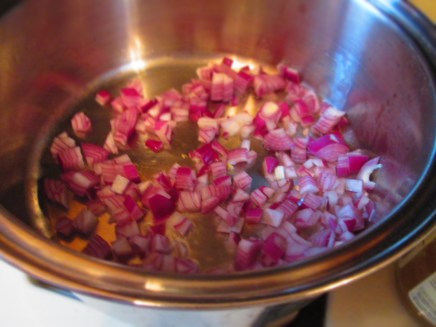
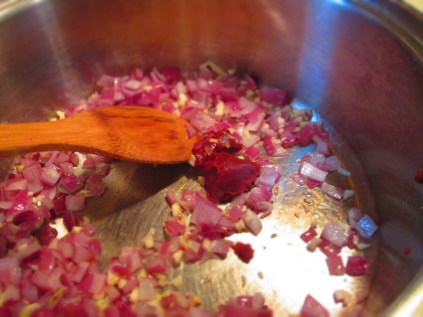
Heat the oil in a Dutch oven or large saucepan. Add the onion and ¼ teaspoon of the salt, and sauté over medium-high heat until soft and translucent.Add the garlic and sauté until fragrant, 1 to 2 minutes. Drop in the tomato paste and stir it in until it’s well blended, then let it cook for a minute or two, until the bottom of the pot starts to brown.Pour in a little bit of the broth to deglaze the pot and scrape up the brown bits with a wooden spoon. Let this cook until the liquid has evaporated.Add the bell pepper, carrot, celery, and ½ teaspoon of the salt and sauté until all the vegetables have softened but are still firm.Pour the liquid from the tomatoes into a measuring cup and add enough water to make 1 cup. Add this to the pot. Pour in the broth, and add the beans, bay leaves, remaining salt, and black pepper. Mix well.Bring this to a boil; lower the heat to medium-low and simmer, partially covered, about 1 hour, or until the beans are tender but not mushy. If the pot dries out before the beans are cooked, add more water or broth and stir it in. Stir in the parsley and other herbs and taste for seasoning. Add more salt and/or pepper, if you like.
Remove the bay leaves and serve with rice or cornbread, or on its own.
Roasting is my favorite way to cook almost any vegetable, but it’s definitely the way to go with root vegetables and squashes. Because it’s so easy, this is the perfect dish to serve at any weeknight meal. But because it’s easily doubled or tripled, it’s ideal for the Thanksgiving table, or for any special autumn or winter meal. Enjoy.
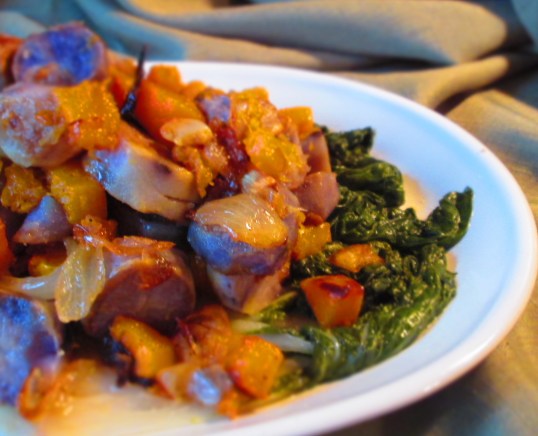
Roasted Squash and Purple Potatoes with Baby Bok Choy
Makes 4 to 6 servings.
6-7 large garlic cloves, peeled 2 cups cubed butternut or other winter squash 2 cups cubed purple potatoes (about 1½ pounds) 1 small onion, sliced 3 tablespoons + 1 teaspoon olive oil 3 teaspoons kosher salt ½ pound baby bok choy Preheat the oven to 375 degrees F.
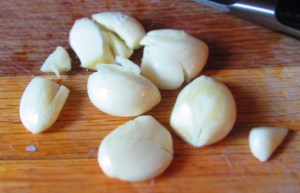
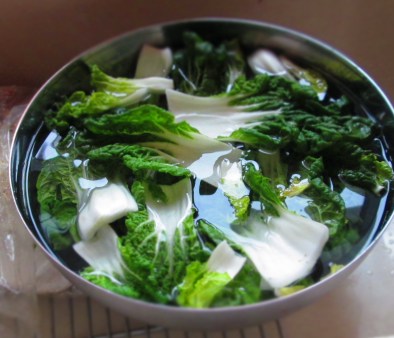
Slice 1 garlic clove and set aside. Smash the rest with the flat side of a knife blade (hit your palm CAREFULLY down on the blade).Combine the squash, potatoes, onions, and smashed garlic in a medium bowl. Add 3 tablespoons of the oil and 2 teaspoons of the salt and mix well. Transfer to a baking sheet and roast until the vegetables are tender and golden brown, about 40 to 45 minutes. Stir halfway through.Meanwhile, make the bok choy. Slice off the root end and separate the leaves. Soak the leaves in a bowl of cool water for about 10 minutes. Remove the bok choy and rinse them.Heat the remaining oil in a medium skillet. Add the sliced garlic and sauté until fragrant, about 1 to 2 minutes. Add the bok choy and remaining salt and cook, covered, for 5 minutes. Uncover the pan and continue cooking over medium heat until tender. Taste for seasoning and adjust if needed.Place the bok choy neatly on a platter. Spoon the squash and potatoes over the bok choy. Serve hot.
This Sunday is Easter Sunday, which is traditionally a day filled with of various types of sweet breads (by that, I mean actual breads that are sweetened, not the other kind of sweet breads).
In my book, Vegetarian Italian: Traditions—Bread, I offer a recipe for Pasticcini di Pasqua (Little Easter Buns). I’d like to share that with you here, just in time to bake some for Sunday.
You can get many other Italian bread recipes in that volume, and lots of other great Italian recipes in the other books in that series: Appetizers, Pasta, Soups & Stews, Pizza & Focaccia, Entrees & Sides, Rice & Potatoes, and Desserts. (These were originally in one volume, in several editions, but those are no longer available.)
Happy Easter to all those who celebrate. Enjoy!
Pasticcini di Pasqua (Little Easter Buns)
Makes 4 buns.
2 packages active dry yeast 1¼ cups all-purpose flour, plus extra for dusting 2 eggs, divided ¼ cup sugar 1 tablespoon butter, softened ¼ teaspoon salt 1 teaspoon grated orange zest 1 teaspoon grated lemon zest Few drops food coloring of your choice 4 soft-boiled eggs, shells intact 2 tablespoons colored jimmies or sprinkles (optional)
In a small bowl, sprinkle yeast over ¼ cup very warm water. Stir in 2 tablespoons flour and mix well. Cover bowl with plastic wrap and let sit 1 hour.
Place remaining flour in a large bowl. Add yeast mixture. Beat one of the raw eggs and add to bowl, along with sugar, butter, salt, and orange and lemon zests. Mix well until a soft dough forms. Turn out onto a lightly floured surface and knead until smooth and elastic, about 5 or 6 minutes. Put dough back into bowl, cover with a cloth towel or plastic wrap, and let rise in a warm, draft-free place until doubled in bulk, about 2 hours, or overnight in refrigerator.
Grease a baking sheet with butter or nonstick spray, or line it with parchment paper, and set aside. Preheat oven to 350°F. Place 2 or 3 drops food coloring on each soft-boiled egg and use a pastry brush or your finger to spread color over entire eggs. Set aside.
Divide dough into 4 equal parts. Roll each piece into a ball, then flatten into ¼-inch-thick disks. Place on baking sheet. Press center of each with your fingers to make an indent and gently place an egg into indents. Gently press dough around egg. Beat other raw egg and brush dough. Sprinkle jimmies or sprinkles, if using, around tops of dough and eggs. Bake until buns are golden brown and puffed up, about 35 to 40 minutes. Transfer to a wire rack to cool. Store in a plastic bag or container in refrigerator.
Serve these on Easter morning at room temperature. Remove egg from center, peel, and enjoy.
What is it about chocolate-covered strawberries that makes them the perfect St. Valentine’s Day delicacy?
Chocolate is the perfect treat for any special occasion, because it, itself, is special. But it’s particularly popular for Valentine’s Day because, as you may know, it’s an aphrodisiac.
You can cover many things in chocolate but why strawberries? Well, just look at them. They’re red (which represents love and passion), they’re sweet, and they’re luscious-looking.
And, finally, the combination is so incredibly delicious and decadent.
And they’re not as fattening as you might think. If you use dark chocolate, it’s only 57 calories for half an ounce of chocolate and one large strawberry (not including toppings).
Best of all, they’re not as difficult to make as they might seem. In fact, apart from any toppings you put on them, the recipe requires only two ingredients…wait for it…can you guess? Strawberries and chocolate!
Make some for your sweetie, or anyone you care about. Happy Valentine’s Day!
Chocolate-Covered Strawberries
12 large strawberries 4 oz. good-quality dark chocolate Colored sugar, chopped nuts, or decorating items (crushed candy, jimmies, sprinkles, crushed white chocolate, etc.), optional
Line a sheet pan with wax or parchment paper and set aside. (I used a cooling rack as well, but it isn’t necessary.)
Wash the strawberries (preferably using a vegetable wash), and set them on a towel. Pat them gently to absorb excess water, then let them sit to fully dry. Do not remove the husks.
Place the chocolate in the top part of a double boiler (or in a non-aluminum bowl set over a pot). Bring an inch or 2 of water to a boil in the bottom pot, then lower the heat to a simmer. Place the chocolate over the simmering water and let it melt. Stir it gently once in a while. When the chocolate has all melted, give it a gentle stir and turn off the heat.
Using the husks to help you, dip a strawberry into the chocolate and rotate it to cover it all. Let the excess chocolate drip off back into the pot. Rest the strawberry on the wax or parchment paper. Coat a few more strawberries and decorate them (before the chocolate hardens). Continue coating and decorating the rest of the strawberries.
Store tightly sealed in the refrigerator up to 3 days.
So, the holidays have come and gone. You’ve shopped until you dropped, partied hardy, and eaten every holiday goodie there was.
Now you’re settling back into a regular routine again. The decorations have come down (maybe), you’ve made your resolutions (possibly), and you’re starting to eat normal and/or healthy food again (hopefully). You open up your refrigerator and find that container of eggnog that never got finished is still there, with still enough eggnog in it that makes you feel bad about throwing it away.
You don’t have to.
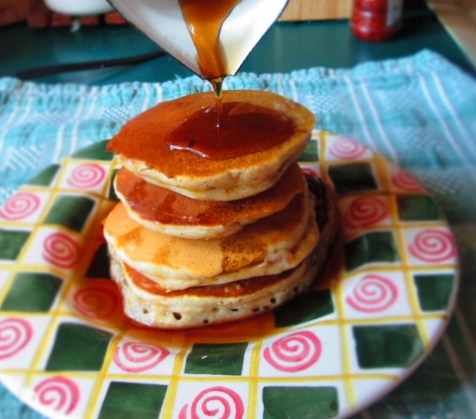
There are many ways to use up leftover eggnog, but one of the simplest is pancakes. Eggnog pancakes are kind of like buttermilk pancakes, but they’re richer and more complex.
Okay, so pancakes don’t have to be complex. But it’s really, really great if they’re tasty and satisfying. Made with eggnog, they are.
So, if you’re like me and hate to throw out even a scrap of food, try this recipe with that leftover eggnog. It’s a great post-holiday treat.
Enjoy!
Winter Eggnog Pancakes
Makes 16 pancakes.
1½ cups all-purpose flour 2 teaspoons baking powder ½ teaspoon baking soda 1 tablespoon maple or coconut palm sugar ¼ teaspoon sea salt ¼ teaspoon cinnamon Pinch nutmeg Pinch allspice 1½ cups eggnog 1 large egg, lightly beaten 1½ tablespoons unsalted butter, melted
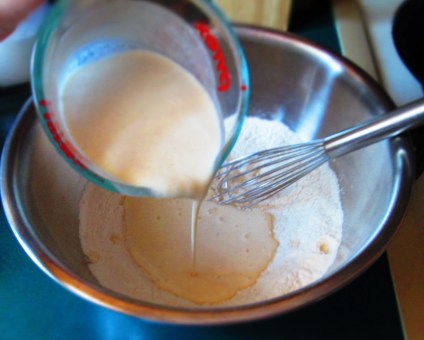
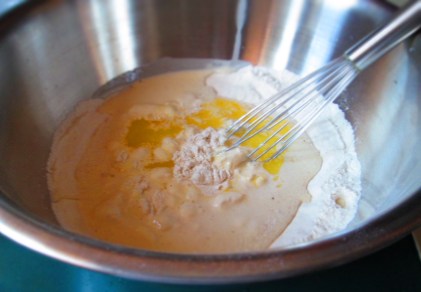
In a large bowl, whisk together the flour, baking powder, baking soda, sugar, salt, cinnamon, nutmeg, and allspice.In a medium bowl or measuring cup, whisk together the eggnog, egg, and melted butter. Pour this into the dry ingredients and mix gently just until blended.Heat a nonstick or cast iron skillet over medium heat. Place several mounds of the batter, a scant ¼ cup each, into the pan about an inch apart. Spread the batter out just a little to ensure even cooking (the eggnog makes the batter thick and it may not spread on its own).Let them cook until bubbles form on top and the bottoms have browned, about 2 minutes. Flip them over and continue to cook until the bottoms have browned and there’s no wet batter on the sides, about another 1 to 2 minutes.Serve with real maple syrup, fruit, jam, or whatever toppings you like.
Leave the zucchini and other fair-weather vegetables to summer. Winter calls for thick-skinned squashes.
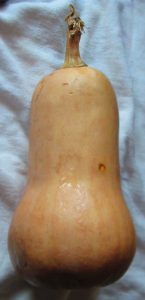
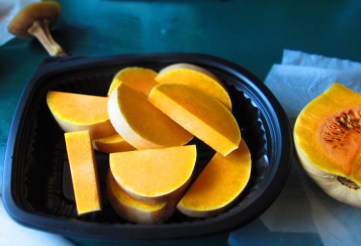
My favorite is butternut squash. In my opinion, it not only has the best flavor, but the best texture as well. When cooked down, it’s creamy and smooth, and incredibly diverse.
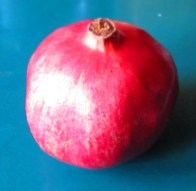
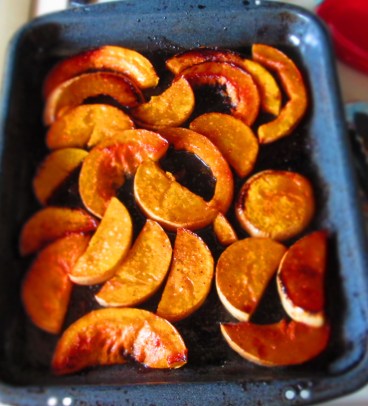
Roasting brings out the sweetness and beauty in most vegetables, but this is especially true of squash. My mother wanted me to roast squash for Thanksgiving and I wanted to come up with something that was familiar, that I knew would be liked, but something every-so-slightly different. I came up with an easy, delicious honey-soy-mirin glaze and honey-pomegranate sauce…because, you know, pomegranates.
Unless you’ve been living under a rock, you’ve heard how healthful pomegranates are. Here’s a quick rundown of their health benefits:
Based on US RDA, one cup of pomegranate seeds contains 7 grams fiber, 3 grams protein, 30% vitamin C, 36% vitamin K, 16% folate, and 12% potassium. They have antiinflammatory, antibacterial, and antifungal properties.They help fight cancer, especially prostate and breast, and heart disease, and have been known to improve memory function.
Delicious AND healthy. Do you need anything more? Give this a try on a cold winter day…or even a warm one. Enjoy!
Roasted Butternut Squash with Honey-Soy-Mirin Glaze and Honey-Pomegranate Sauce
1 pomegranate 2 tablespoons honey 1 tablespoon white wine or ginger ale
Grease a baking sheet. Preheat the oven to 400 degrees F.
Peel and seed the squash. Cut into 1/2-inch-thick slices and place them in a large bowl.In a small bowl, mix together the honey, olive oil, soy sauce, mirin. pour over the squash.
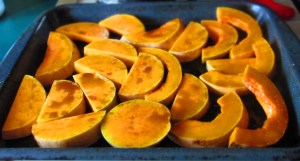
Sprinkle in salt and pepper. Use your hands to spread the mixture over both sides of the squash. Lay the slices neatly on the baking sheet in a single layer.
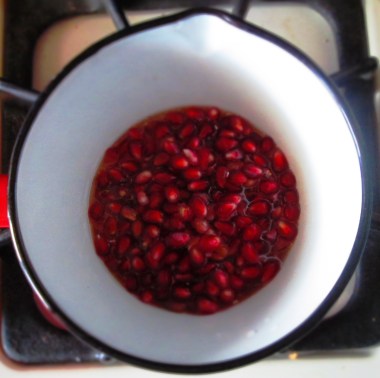
Roast until almost tender, about 20 to 30 minutes. Turn the slices over and continue roasting until fully tender and golden brown at the edges.Meanwhile, make the Honey-Pomegranate Sauce. Cut open the pomegranate and place the pieces in a large bowl of cool water. Separate the seeds from the membrane and discard the skin. Let the membranes rise to the top and scoop them out.Drain in a mesh strainer and rinse.Measure out ½ cup seeds and place in a small pot. Reserve the remaining seeds for the top or another purpose. Mix together the honey and wine and add to pomegranate seeds. Cook over medium-low heat until thickened, about 10 minutes.Transfer cooked squash to a serving platter. Drizzle sauce over top, sprinkle on some fresh pomegranate seeds, and serve.
Still looking at the bowl of leftover cranberry sauce in the fridge? The nice thing about cranberry sauce is that it has a pretty long shelf life (the sugar acts as a preservative). But the question is always, what do I do with it all?
Well, I’m here to help. Once again, here is my list of 12 things to do with leftover cranberry sauce.
Mix a tablespoon of it into chicken or tuna salad.
Make a salad dressing. Add 1 or 2 tablespoons to a homemade vinaigrette.
Use it as a sauce for meats, vegetables, fish, and (my favorite) vegetarian “chicken” patties.
Mix about ½ cup to 1 cup of it into cheesecake before placing it in the oven. (Just swirl it in; don’t overmix.)
Dollop some on top of slices of pound or angel cake.
Stir about 1 cup of it into a big pot of chili.
Make ketchup out of it—add it to a traditional homemade ketchup recipe.
Turn it into salsa by adding some minced jalapeno or some chili powder and cumin to it, or a chutney by adding other dried or fresh fruits, such as raisins, chopped dates, or chopped apple.
Use it as jam for toast, muffins, or bagels.
Mix about ¼ cup into muffin batter (these will be the best cranberry muffins ever!).
Use it as an ingredient in homemade ice cream.
Add it to a breakfast bread.
This recipe is a healthy loaf (which many people appreciate after Thanksgiving), using whole wheat flour and flax seeds. You can have a healthy post-Thanksgiving breakfast or snack while still enjoying holiday flavors. You don’t need a lot of sugar, either, because there are sweeteners already in the sauce. As for the flax seeds, use a clean coffee grinder to grind it until you get a coarse powder. Enjoy!
Cranberry Sauce-Walnut Bread
1 cup whole wheat flour 1 cup all-purpose flour 1 tablespoons flax seeds, ground 2 tablespoons sugar or maple crystals 1 teaspoon baking soda ½ teaspoon ground cinnamon ¼ teaspoon allspice ¼ teaspoon nutmeg 1/2 teaspoon salt 2 large eggs 3/4 cup buttermilk ½ cup cranberry sauce ½ cup chopped walnuts
Preheat oven to 375 degrees F. Line an 8 x 4-inch loaf pan with parchment paper so that parchment sticks out of the sides (or grease it very well).
In a medium bowl, whisk together flours, flax seeds, sugar, baking soda, cinnamon, allspice, nutmeg, and salt.In a small bowl, mix together eggs and buttermilk.Mix this into the flour mixture just until all dry ingredients are moistened.Stir in the walnuts. Swirl in the cranberry sauce, but don’t mix it in completely—you just want it to run through the batter.Spoon batter into loaf pan. Bake until lightly golden on top and a toothpick inserted in the center comes out fairly clean, about 20 to 25 minutes. Some moist cranberry on the toothpick is okay.
Set pan on a wire rack to cool for 10 minutes. Turn loaf out onto the rack. Serve warm or cool completely.
If you have any cranberry sauce left, dollop a spoonful on each slice.
A few years ago, I introduced a recipe for Cranberry Sauce with a Sorghum Twist. I think using sorghum syrup is a great way to enjoy traditional dishes without using white cane sugar.
In my cranberry sauce, it also adds a different dimension to the flavor. And it’s still one of my favorite cranberry sauce recipes.
So, below is a reprint of my original post from 2013. I hope you like it. Have a fun, safe, and peaceful Thanksgiving.
Thanksgiving is coming up and people are always looking for new and different ways to serve favorite and/or traditional dishes. Purple potatoes are a great way to liven up the table.
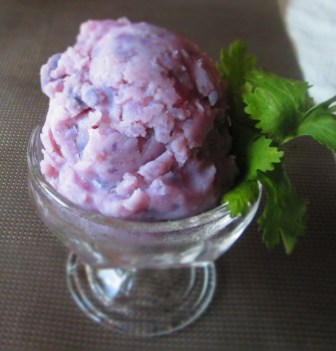
Purple potatoes are originally from South America (where potatoes in general are originally from), particularly Peru and Bolivia. In fact, they’re sometimes referred to as Purple Peruvian potatoes. While they taste pretty much the same as standard white potatoes, because of their pigment, purple potatoes are high in antioxidants—4 times as much as white potatoes. Antioxidants are cancer-fighting agents, are good for immunity and heart health.
I found some beautiful purple potatoes at the farmers’ market and decided to mash them. Their dramatic blue/purple color makes this a special dish while still giving everyone the scrumptious mashed potatoes they’ve come to love and expect.
Enjoy.
Mashed Purple Potatoes
6 small to medium purple potatoes 2 tablespoons olive oil 1 tablespoon half-n-half ½ teaspoon sea salt Freshly ground black pepper
Scrub the potatoes and cut them in halves or quarters. Place them in a medium pot, cover with cold water, and bring to a boil.
Lower the heat to low, partially cover, and simmer until the potatoes are tender when pierced with the tip of a knife. Drain well and let cool a bit. When they’re cool enough to handle, peel off the skin.
Place the potatoes in a mixing bowl. Add the oil, half-n-half, salt, and pepper. Mash with a potato masher. (Don’t use a food processor or blender, as this will make the potatoes gummy.)
Check the potatoes for seasoning and adjust, if needed.


 Do you still have cranberry sauce left over after the holidays? I know some of you do. Admit it. You’ll see lots of sites and professional chefs telling you that everything should be thrown out three days after the holiday. I have news for you—if you’ve stored it properly, that cranberry sauce is probably still good. The thing is, because of the sugar content, cranberry sauce has a long shelf life. It’s just like a jar of jam or preserves in your refrigerator. (Of course, if it smells or tastes funny, or if it has mold on it, throw it out.) For those of you who prefer the stuff that comes in cans (you can admit that, too, don’t be ashamed), you can use those up as well, so that they don’t sit in your pantry for another year.
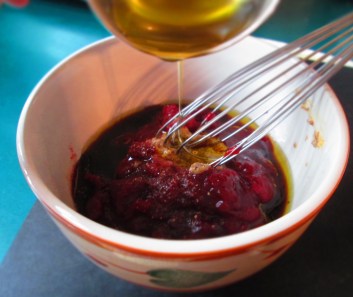 Using a rubber spatula, strain the dressing through a mesh strainer into another bowl. Taste for seasoning and adjust if you like.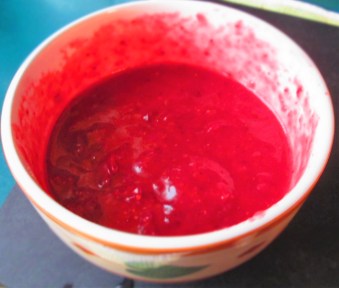







 H
H






 So, the holidays have come and gone. You’ve shopped until you dropped, partied hardy, and eaten every holiday goodie there was.








 thing about cranberry sauce is that it has a pretty long shelf life (the sugar acts as a preservative). But the question is always, what do I do with it all?

 In a small bowl, mix together eggs and buttermilk.
 Mix this into the flour mixture just until all dry ingredients are moistened.
 Stir in the walnuts. Swirl in the cranberry sauce, but don’t mix it in completely—you just want it to run through the batter.
 Spoon batter into loaf pan. Bake until lightly golden on top and a toothpick inserted in the center comes out fairly clean, about 20 to 25 minutes. Some moist cranberry on the toothpick is okay.

 potatoes in general are originally from), particularly Peru and Bolivia. In fact, they’re sometimes referred to as Purple Peruvian potatoes. While they taste pretty much the same as standard white potatoes, because of their pigment, purple potatoes are high in antioxidants—4 times as much as white potatoes. Antioxidants are cancer-fighting agents, are good for immunity and heart health.


 Miz Chef