payday loans

Archive for the ‘baking’ Category

Lambert’s Throwed Rolls

If you had told me a couple of years ago that I would find myself in Foley, Alabama, twice in a lifetime, I would’ve said you were nuts. Yet, for the second time in my life, I indeed found myself in Foley, Alabama.

Foley is on the southern end of Alabama and sits along the Gulf Coast, making it a popular beach town. The coast line is loaded with hotels and beach home rentals, and on a sun-parched day, you can see beach-goers trundling their way back to their digs. I first went there on a cross-country trip (which I blogged about HERE) and I was there again recently during a day trip around the Gulf Coast.

I was visiting a friend for a long weekend and, despite the savage tornadoes that had hit nearby towns in the previous couple of days, the weather was absolutely gorgeous. So, we headed over to Mobile, went across Mobile Bay to a little town called Fairhope, and then down to Foley. We then shot across a long strip of land (much like Long Island and kind of shaped like a sideways stocking) that was occupied mostly by private beach homes. At the end of that peninsula, we caught a ferry over to Dauphin Island—another sleepy beach town, minus the tourists—then went over a bridge back to the mainland. It was the perfect day for a trip like that, the sea air was relaxing, and our minds and bodies got a much needed break.

But this is not a travel blog, it’s a food blog, right? So, let’s head back to Foley. On my last trip there, we encountered a place called Lambert’s Café. It caught our attention because the signage for the café boasts “Home of Throwed Rolls.” As a food writer, how could I not investigate? So, we went in and I ordered a box of throwed rolls to go (we were not inclined to eat at that point). I inquired of the clerk why they were called throwed rolls. I thought it had something to do with how they baked them, just like drop biscuits are so called because the batter is dropped onto a baking sheet. But the clerk replied, “Because they throw them at you.”

“Excuse me?” I thought I had misheard.

“They throw them at you.” She looked at me as if had just asked her where her red-headed child came from.

Starting plate

The order desk is a little off to the side of the main dining area in Lambert’s, so while I waited for my rolls, I casually walked a few steps over and peered into the dining room. Sure enough, Lambert’s wait staff was chucking hot rolls at the guests. Legend has it that Norman Lambert, son of the first owner, would walk around the original location (there are 3), and hand out the rolls. One day, it was so packed that Norman couldn’t get to everyone and one customer, anxious to get his roll, shouted, “Throw the dang thing!” It stuck and it’s been a tradition ever since.

Having a hot roll lobbed at you isn’t the most fascinating thing about Lambert’s, though. It’s the menu. Or, more precisely, what you get from the menu. Here’s how it works: You order something from the menu and choose your sides. In addition, Lambert’s staff walks around with bowls of different sides, such as fried okra, black-eyed peas, and potatoes. You can have as much of any of these sides as you want. And, of course, there are the carts of freshly baked, warm rolls.

Halfway through

I am normally a good eater. That is, I eat healthy foods of the best quality I can get as much as possible. However, when I’m in Rome, I eat as the Romans do, and if that means eating some fried stuff, so be it. My friend ordered fried chicken with cucumber-onion salad and mashed potatoes with white gravy; I ordered chicken fingers with turnip greens and mashed potatoes with brown gravy. At this point, neither one of us knew about the bottomless refills of side dishes. We were enlightened when staff kept coming to our table and asking if we’d like some of what they had. I decided that I wanted to try a little of everything. So, at various points in my meal, I had on my plate—aside from my original order—okra, black-eyed peas, macaroni and tomatoes, potatoes and onions, and boiled cabbage.

Final plate

By the time we finished our dinner, I had more food on my plate than when I started. It’s a slightly disorienting experience—kind of like when someone keeps filling your glass of wine every time you turn around, and when you turn back, you wonder where it came from and whether you had actually drunk any. Unfortunately, my camera is coming to the end of its lifespan and so my close-up shots of my plate came out fuzzy, but you can still see the amount of food on the dish. The beverage cups, by the way, are bigger than my head. Between the two of us, we had enough pink lemonade to take out and refresh us throughout the rest of our journey that day.

Is Lambert’s food the best of its kind that I’ve ever had? No, but it’s good, satisfying, and filling (very). It’s also a fun and funny place (the interior is much like Cracker Barrel) and the throwing around of rolls elicits laughter and joking. It’s also a good place to stop if you’re on the road because you can always take your leftovers and ensure another meal for yourself and save money. The rolls are the best part—they’re fluffy, warm, and addictive.

They also make their own sorghum molasses, which they offer to diners to spread on their throwed rolls. I bought a small jar the last time I was there and decided to splurge on the 2.7-pound can. Sorghum molasses is a little harder to find in New York than it is down South so I stocked up. (I stocked up with 5 lbs of pecans, too, while in AL, which prompted the TSA scanner guy at the airport to comment that I had a little food in my bag. I told him that it was just a snack.) Keep in mind that if you’re flying, you can’t take sorghum in the main cabin with you, unless it’s less than 3 ounces. Pack it in your checked bags.

Some famous customers who have patronized Lambert’s have been: Elvis Presley; Morgan Freemen; Jay Leno; Tanya Tucker; Clint Eastwood; Waylon Jennings; Tammy Wynette; and many more.

Lambert’s 3 locations are in Sikeston, MO; Ozark, MO; and Foley, AL. Their website is www.ThrowedRolls.com.

2981 S. McKenzie
Foley, AL 36535
(251) 943-7655

In honor of Lambert’s, here’s a recipe for rolls with sorghum molasses. The recipe is on the Internet, posted by numerous people, but no one seems to know who the original source actually is. Spread them with sorghum molasses. Enjoy!

Throwed Rolls

Yield: 12 rolls

1 teaspoon sugar
1 (1/4 ounce) package dry active yeast
1 cup warm milk
1/4 cup melted butter
1/4 cup sugar
1 egg, beaten (at room temp.)
1 teaspoon salt
4 cups all-purpose flour

Directions

  1. Preheat oven to 350 degrees.
  2. Combine sugar and yeast in 1/4 cup tepid water (105-110 degrees). Let stand 5-10 minutes until yeast begins to foam.
  3. Thoroughly mix milk, butter, sugar, egg and salt in large bowl.
  4. Stir in the yeast mixture and 3 1/2 cups of the flour, adding a bit more if necessary to make a soft, pliable dough.
  5. Turn dough out on floured board and let rest. Clean and butter the bowl.
  6. Knead dough gently 4-5 minutes, adding flour if necessary, until dough is smooth and silky.
  7. Return to bowl, cover with plastic wrap, and let rise in warm place until doubled in size about (1-1/2 hours).
  8. Butter a 12 cup muffin tin.
  9. Punch down dough.Pinch off pieces that are about 1 1/2 inches in diameter (enough to fill one-half of muffin cup). Roll each piece into smooth balls. Place two pieces in each muffin cup.
  10. Cover dough loosely with plastic wrap for 45 minutes.
  11. Bake rolls for 20-25 minutes, or until light brown.
  12. Serve as soon as they are cool enough to throw.


Banana Bread Day

Today is National Banana Bread Day. I love banana bread. It’s filling, satisfying, comforting, and just plain delicious. Plus, when you have those bananas that are just too ripe to eat, instead of tossing them, they can go right into a batter for bread.

We owe the existence of banana bread to the introduction of baking powder to the average household kitchen. Banana bread is in a class of baked goods called quick breads. This basically means that the dough doesn’t have to rise from yeast—it is leavened by a chemical leavener, thereby making it a “quick” bread to bake.

Baking soda is also used for quick rising, but it requires an acid to activate it, such as buttermilk, vinegar, or lemon juice. Baking powder is a chemical leavener that contains both baking soda and an acid. Variants of baking powder were being made in the early 1800s but the types we are familiar with today became more widely used in the late 1800s. By the time World War II rolled around, it was in common use. The use of bananas in bread came about for a simple reason: so money wasn’t wasted on overripe produce during the difficult war years. You can read some more interesting history on Wikipedia.

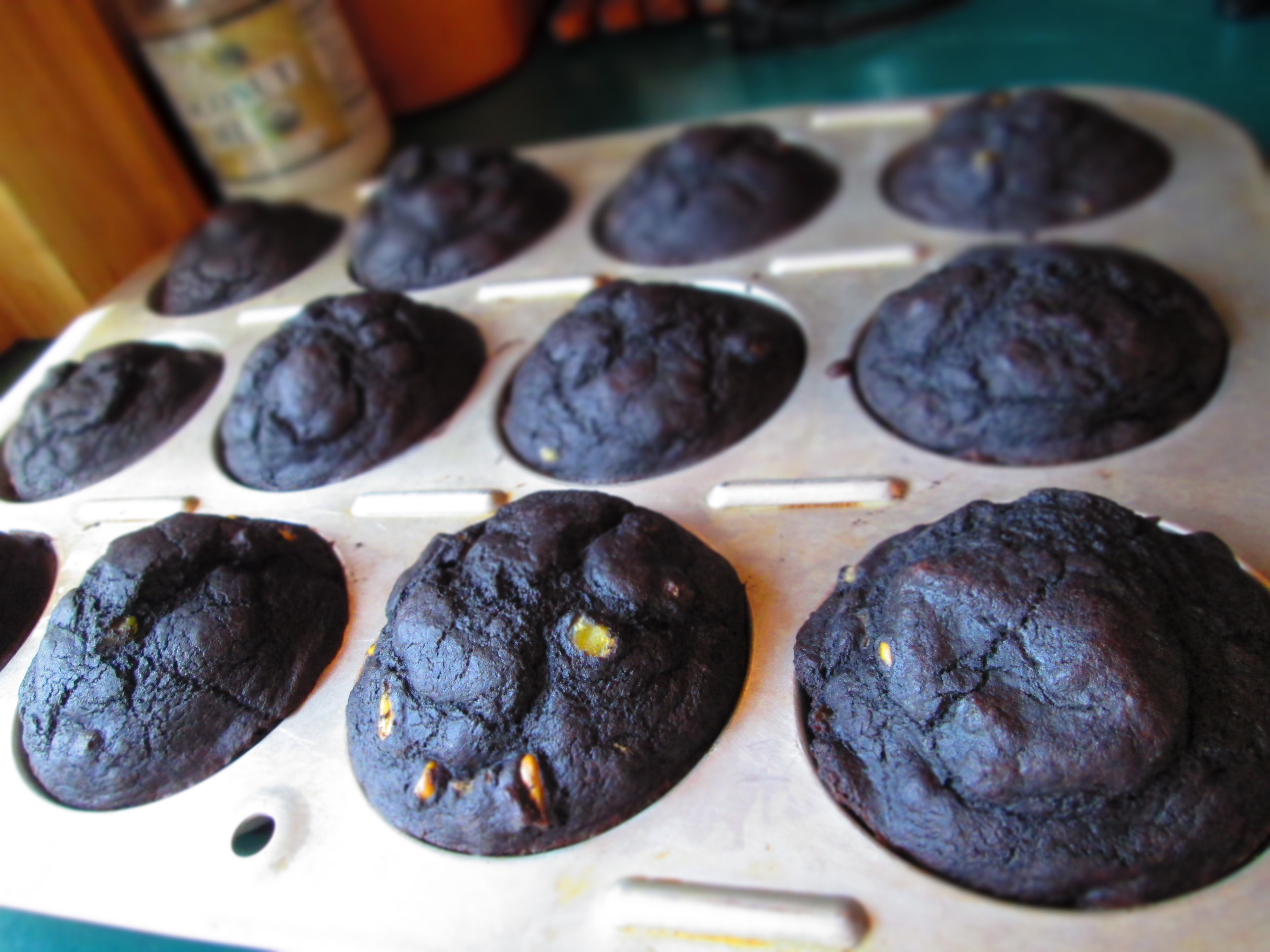
Because there are people in my life who are gluten free, I make a lot of gluten-free goodies. The banana bread recipe below is adapted from my favorite gluten-free baking book, Gluten-Free Baking by Rebecca Reilly. I added my own touches to it (including the coconut) and it makes for a delicious, not-too-sweet breakfast bread or snack. I forgot to check on mine, so it got darker than it should have, but it was tasty just the same. Enjoy!


Gluten-Free Banana Bread

Adapted from Gluten-Free Baking by Rebecca Reilly

3/4 soy flour
1/2 cup potato starch
1/4 cup rice flour
1 tsp cinnamon
1 tsp baking powder
3/4 tsp baking soda
1/2 tsp cream of tartar
1/2 tsp xanthan gum
1/4 tsp nutmeg
1/4 tsp allspice
Pinch salt
2 eggs
1/3 cup coconut oil (or other oil)
2/3 cup palm sugar
1/2 cup mashed banana
1 cup desiccated coconut*

1. Preheat oven to 350 degrees. Lightly oil a 8 1/2 x 4 1/2-inch loaf pan.

2. Mix dry ingredients (up to the eggs) in a large bowl. Make a well in the dry ingredients.

3. Mix eggs, oil, sugar, banana, and 1/2 cup coconut; pour into the well. Stir until blended.

4. Spoon batter in to loaf pan. Sprinkle the remaining coconut over the top.

5. Bake until a toothpick comes out dry but with some crumbs attached, about 40 minutes.

* Shredded, unsweetened coconut.


Galette de Rois, or King Cake

I had to go into Manhattan the other day, to Broadway Panhandlers (a kitchen supply store), for some things that I needed. It was a frigidly cold day, and I had nowhere else to be (for the first time in a very long time), so I decided that afterwards, I would stop in somewhere and get a cup of coffee. Well, after I did my shopping, my bladder began warning me that if I decided to have any beverage with ties to Ethiopia, it would boldly protest. And because I hate using public restrooms, I decided to forgo the coffee. I was a little hungry, though, so I went in search of something that I could nibble on while riding home on the train.

A block away from Broadway Panhandlers, I spotted a Financiers, a French coffee/pastry shop, on Astor Place. There’s a Financiers around the corner from my school and I had stopped in there just about every week for a cup of Saturday afternoon coffee, but I had never tried one of their baked goods. So, here was my opportunity. I walked in and checked out the selection in the display case, and found it oddly sparse. I don’t know if this was normal for a Saturday afternoon or if they had gotten a huge influx of people stopping in for something warm and a bite to eat on this bitter January day, but there was not much of a selection. I almost walked out.

Then something caught my eye. Something labeled a galette de rois. With my very limited knowledge of French, I knew that this meant “king cake,” which was reinforced in my mind when I realized what time of the year it was.

King Cake is puff pastry filled with frangipane cream and is associated with the Christian festival of Epiphany. The feast of the Epiphany, traditionally falling on January 6, is the celebration of the revelation of Christ in human form. For Christians in the Western world, this more specifically celebrates the visitation of the Three Kings on the Baby Jesus, which is why the holiday also goes by the name of Three Kings Day. In the East, it revolves around the baptism of Jesus in the Jordan River. In the United States, the king cake is also eaten in celebration of Mardi Gras, as it is wherever Carnival takes place. Traditionally, a little ceramic baby (representing the Baby Jesus), or some other trinket, is baked inside the cake. The person who gets the little prize is responsible for hosting the following year’s Epiphany celebration. The English tradition is to put a bean in the cake, which is why it also goes by the name Bean Cake. (By the way, there’s a different kind of king cake that is actually a stuffed bread and which is decorated with bright Mardi Gras-type colors. That’s not the kind of king cake I’m talking about.) In the French tradition, a large king cake is topped with a paper crown.

Love Live the King

When I stepped onto my train, I sat down and reached into my bag for a bite of my galette de rois. I tried to break off a mouthful but as I pinched the crisp pastry, I discovered that it was so flaky that it crumbled in my fingers. And it was so buttery that my fingers came away with the pastry glued to my fingers. I knew that if I made any further attempts at breaking off a piece, I would be covered in puff pastry flakes. My king cake had to wait until I got home.

So, now I was home. I made myself some espresso and cut into my cake. The flakey layers crackled slightly as the knife went through them, which promised me a light crunch between my teeth. I wasn’t disappointed. The puff pastry was indeed light, flaky, and buttery, but not sickeningly so (when something is too buttery, it makes me nauseated). The frangipane cream was sweet but not cloying, and had floral, fruity notes. Frangipane is an almond pastry cream made from butter, eggs, sugar, and almonds. It is sometimes enhanced by almond or vanilla extract, or other flavorings. It was really a delicious dessert.  

If you want to try making king cake yourself, it’s really quite easy, and here’s a recipe that I made up myself. Although king cake is usually for the Epiphany, I think it will go over very well any time of year.


Galette de Rois (King Cake)*

Frangipane Cream
1/2 cup ground almonds
½ cup softened butter
2/3 cup organic sugar
1 egg
1/2 teaspoon almond or vanilla extract

1 package puff pastry (thawed if frozen)
1 egg

1. Preheat oven to 425 degrees.

2. Combine all frangipane cream ingredients in a food processor and process until smooth and creamy.

3. Cut four 4-inch circles in the puff pastry sheet. Place two of them on a baking sheet lined with parchment paper.

4. Place equal amounts of the cream in the center of the two circles. Top each one with the remaining puff pastry rounds. Pinch them gently around the edges to seal.

5. Beat the egg with a little water and brush the egg wash over the tops of each galette.

6. Bake for about 30 minutes, or until golden brown. If it gets too dark too fast, lower the heat to 350 and continue baking for 10 to 15 minutes.

* For a traditional celebration, make several batches and place a little ceramic baby, bean or trinket in one of them. Share them with family and friends and whoever gets the prize will have to make them next year. You can also make little paper crowns and top each cake with one.


National Homemade Bread Day

Today is National Homemade Bread Day. Making homemade bread is a beautiful thing and I often wish I had more time to do it. I thoroughly enjoyed the bread-baking class at the Natural Gourmet Institute and the students made some gorgeous loaves. Check out the photos HERE. You can also get the recipe for Whole Wheat Poppyseed Bread there, too (seen in photo on the right).

And because the holidays are coming up, here’s a recipe for Braided Challah Bread, courtesy of Bread-recipe.com.

Braided Challah Bread

Ingredients

2 (1/4-ounce) packages active dry yeast or 5 teaspoons active dry yeast
1 1/2 cups warm water (105°F to 115°F / 40°C to 45°C) – divided use
2 tablespoons granulated sugar
2 teaspoons salt
2 1/2 tablespoons corn oil
3 large eggs – divided use
4 3/4 cups all-purpose or bread flour – divided use
3 tablespoons poppy or sesame seeds

Directions

  • In a small bowl, combine yeast, 1/2 cup warm water and sugar. Leave it in a warm place for 5 minutes.
  • Beat the rest of warm water with salt, corn oil, 2 eggs, yeast and 2 1/2 cups flour in a separate bowl. Beat often for 5 minutes or until elastic. Stir in 2-1/4 cups more flour gradually, working flour into dough thoroughly.
  • Turn flour onto a lightly floured surface and knead for about 5 minutes or until smooth and elastic. In a greased bowl, put dough and turn to coat the top. Use a plastic wrap to cover and leave it to rise in a warm place for an hour or until doubled.
  • Prepare 2 cookie sheets and grease with oil.
  • Deflate dough and knead for 1 minute. Divide into 6 portions and roll each one into equal 15-inches long. Make 2 braids using 3 strands for each. Cover with a dish towel and leave it to rise for 45 minutes or until doubled.
  • Prepare the oven to 375 degrees F preheat settings.
  • Whisk the egg and brush it over the loaves in an upward motion. Sprinkle top with seeds and bake for 35 minutes. Loosely cover with foil if it appears to brown too fast. Cool over wire racks when done.
  • Makes 2 loaves.


A Little Dough Goes a Long Way

So, out of sequence, we had bread class the other day at the Natural Gourmet Institute. I say out of sequence because, thanks to Hurricane Irene, we had Pizza class first (see how that went HERE).

Some people think that bread is the enemy, when in fact it is a staple of much of the world’s diet and without it, many people would starve. A few fairly inexpensive ingredients come together to form a filling, comforting food that goes a long way. And it’s been made for thousands of years from many different grains, from spelt to millet to teff. Bread has held serious significance throughout history, from being payment to soldiers and rent to landlords, to being symbols of abundance. The Bible refers to bread as the staff of life, and the words “bread” and “dough” are slang words for money.  Some of our language is based on the importance of bread. The word lord is derived from the Old English word hlaford, meaning “master of the house and keeper of the bread.” Lady comes from hlaefdigge, “kneader of the dough.” Until the 19th century, Germans called their employers brotherr, “bread master.” And the convenience of presliced Wonder bread, available after World War I, was so spectacular to U.S. housewives that the expression “the best thing since sliced bread” became part of our vernacular.

Let me tell you, my class pulled off some beautiful loaves. There were bagels, challah, spelt, olive bread, and others. I made a whole wheat poppy seed loaf (see recipe below). Most of us started with a sponge, which is a mixture of flour, water, and yeast that rises for about 30-45 minutes, and again for about 20-30 minutes. The rest of the ingredients get incorporated into that, which makes for a flavorful and texturally pleasing bread.

My loaf rose like a dream and baked even better. Because it was a whole wheat loaf, I wasn’t expecting it to come out as good as it did, but it had a nice, nutty flavor without being too whole-wheaty (that’s because I used a little white bread flour). Per my instructor’s suggestion, I added some lemon zest and it really made the flavor pop. I added additional poppy seeds and pumpkin seeds on top and it was beautiful, too.

Bread is my weakness—I absolutely love it and can eat it endlessly. Or so I thought, because after tasting 10 or 12 different loaves, I’d had enough. All I thought I would want for the next week was salad. It’s how I felt after grain class—like one big walking, bloated, glutinous blob. But unlike grain class, I was ready to eat bread again the very next day.

The instructor practically swooned over my loaves, which made me extremely proud. It was as if the rising of my bread mirrored the rising of my pride. Okay, that’s corny, but it’s true. I’m slowly finding myself in culinary school. I’m not saying that I’m the best culinary student ever (because I know I’m not) or that I will be the next Cat Cora (only in my fantasies), but there’s a side to myself that’s been waiting to come out. Yes, I’ve been a personal chef and that was rewarding, and yes, I have a cookbook published, so cooking is not new to me. But there’s something about going through a formal program and excelling at it that validates what you’re doing. If you’ve been reading my blog, you know that my French knife skills suck, so where technique is concerned, I still have a way to go. But there’s a side to cooking that goes beyond technique; it’s the heart and soul that you put into your cooking that really makes it shine. Your technique can be flawless, but if there’s no “you” in your cooking, you’ve failed.  People will “ooo” and “ahh” over beautiful food, but eating it will get boring if it’s not satisfying to both the palate and the soul. I’m not the most technically proficient cook in the world, but I think my cooking has heart and soul and a lot of “me.”

I’m confronting some personal demons in culinary school and, as one person I know would put it, I’m taking them out for a beer. I’m opening up a dialogue with my demons and trying to figure out why they’re still hanging around me. And, hopefully, I’ll be able to kick them out of my head.

All this from bread?

Yeah.

Whole Wheat Poppyseed Bread

1 1/2 tbsp dry yeast
2 cups warm water
1/4 cup rice syrup
1 cup unbleached white bread flour
4 – 5 cups whole wheat pastry flour
2 tbsp olive oil
1 tbsp sea salt
1/3 cup poppy seeds
1-2 tbsp lemon zest (opt)
1-2 tb poppy seeds and/or pumpkin seeds

1. Preheat oven to 375 F. In large bowl, combine yeast, water, rice syrup, 1 cup of the bread flour, and 1 cup whole wheat flour and stir until thick like batter. cover sponge with plastic and set aside in a warm, draft-free place for 30-45 minutes.

2. Add oil, salt, poppy seeds, and just enough of remaining floru to creat a dough that pulls away from sides of bowl.

3. Knead on talbe for about 10-15 mintues or until smooth.

4. place dough in alrge, clean, lightly oil bowl and cover with clean damp cloth. Proof in warm palce 20-30 minutes or until doubled in size.

5. Prepare bread pans or sheet pans iwth parchment.

6. Gently punch down dough. Let rise again about 15 minutes. Cut dough into two or 4 equally sized balls; shape as desired. Cover with damp cloth and let rise another 15-30 minutes.

7. Bake approximately 30-30 minutes or until golden and firm to touch.


Pizza—It IS All It’s Cracked Up to Be

Pizza has an interesting history, which I talk about in my cookbook, What, No Meat? Here’s an excerpt:

Virtually every culture in the world has one form of pizza or another. In the last couple of decades it has even found its way to the most culturally isolated countries. You probably knew that pizza is an Italian creation, but did you know that it goes back to the ancient Romans? The Romans made what they called moretum, a plain baked piece of dough that they ate with onions. Near the beginning of the 2nd second century A.D., the word picea entered the language to describe a piece of round dough dressed with various toppings, perhaps influenced by the Greek word pièzo, “to flatten.” It finally became pizza soon after. (Sauce didn’t enter the picture until the 18th century.)

The pizza that we know today was created in Naples in 1535 in honor of the marriage of Bona Sforza to Sizismondo I, King of Poland. Despite its grand origin, it became a food for common folk. Pizzerias started out as little holes-in-the-wall, selling pizza to the local peasants. As pizza’s popularity grew, pizzaiuoli (pizza-makers) began adding tables and chairs to entice people to enter. Little by little, they began to decorate and beautify their establishments by putting in colorful tiles or fancy brickwork.

Gennaro Lombardi opened the first pizzeria in the U.S. in New York in 1905. Over time, it became very popular and more pizzerias opened all across the country, becoming a favorite gathering place for people of all classes. Today, pizza is just as American as it is Italian. According to one urban legend, U.S. pizza is so popular that in the 1980s, college students in England ordered pizza to be shipped overseas. Papa John’s pizzeria filled the largest pizza order in history by delivering 13,500 pizzas in June of 2006. This surpasses the Guinness World Records champion, Little Caesar’s, who delivered 13,386 pizzas on August 19, 1998 to employees of the VF Corp. of Greensboro, N.C. at 180 locations in the U.S.

(Excerpt from What, No Meat?: Copyright © Roberti Roberti
Do not reprint in ANY form or media without express written consent.)

Wednesday night was pizza night at the Natural Gourmet Institute. It was probably a little awkward for some because our bread class was cancelled due to Hurricane Irene. Irene hit us full-on on Sunday, August 28, 2011, but the city began shutting down on Saturday. Mayor Bloomberg ordered all mass transit to halt service at noon. This meant that people could get to class but they wouldn’t be able to get home. So, the school closed. That was a relief to me because to make up those classes would have been a pain in the behind for me.

Logically, bread baking should be a prerequisite to pizza making, but circumstances precluded that. But the students in my class are pretty quick learners and in the end, we made some pretty tasty pizzas and focaccia, some of them gluten free. (However, I must say that I did not agree with all the toppings that were made available to us. I just don’t think that tofu belongs on a pizza, no matter how tasty you make it.)

First, we all started by making sponges, a starter made with yeast, water, and flour and is set aside to ferment. Some bakers make a sponge and let it sit for days, even weeks. Some starters—often called “mothers”—have been around for years and years. This is achieved by making a dough with the starter, then taking a piece from that dough and setting it aside, making a dough with that starter, taking a piece, and so on. Artisinal bakers are known for doing this, as it supposedly makes a superior bread.

One of the gluten-free versions of the pizzas was slightly gummy. The bottom was crisp but the part just beneath the toppings had the appearance and texture of undercooked dough, even though it wasn’t undercooked. But the flavor was quite good—better than you’d think from a gluten-free dough. The texture of a gluten-free dough can never be that of regular dough, but you can still get a really good pizza, with a nice, fluffy texture and, with the right toppings, a complex flavor.

We were each assigned a specific recipe. Mine was pissaladiére, which is a French pizza made with caramelized onions, Niçoise olives, and anchovies. I thought it came out pretty good, although I refused to use anchovies. Sorry, all you anchovies lovers, but I just can’t stand the sight, smell, or taste of them. And that pizza was delish! I split my dough into quarters, so I wound up with 4 small pizzas. (See the picture below.)

It was a scramble to get a pizza stone. We actually had lines forming because there were only a few pizza stones and each person had multiple pizzas to throw into the oven. But, eventually, everyone got theirs in and we feasted! At the beginning of class, I was starving. By the end of class, I was stuffed.

So, here is the recipe for pissaladiére, as I made it in school. Enjoy!


Pissaladiére

Sponge:
¼ cup warm water
1 ½ tsp dry yeast
2 Tb unbleached white all-purpose flour

Dough:
½  cup warm water
½ tsp sea salt
1 Tb olive oil
1 ½ cups unbleached white all-purpose flour
cornmeal for coating peels

Topping:
1/3 cup olive oil
4 lbs. onions, thinly sliced
3 cloves garlic, peeled, whole
2 Tb Herbs de Provence
½ tsp sea salt (or to taste)
freshly ground black pepper
1 cup Niçoise olives, pitted
6 plum tomatoes, sliced (optional)

Sponge
In small bowl, combine ¼ cup water, yeast, and 2 Tb flour; stir until thick like batter. Cover sponge and set aside in a warm, draft-free place for 20-30 minutes.

Dough:

  1. Add ½ cup water, salt, olive oil and just enough of the remaining flour to create dough that pulls away from sides of bowl.
  2. Knead dough on table about 10 minutes or until soft dough is created.
  3. Place dough in medium, clean, lightly oiled bowl and cover with plastic wrap. Proof in a warm place for 45-60 minutes or until dough has doubled.
  4. While dough is proofing, place pizza stones in preheated 425 oven, and prepare toppings.

Toppings:
1. Heat olive oil in medium pan over low heat. Add onions, garlic, Herbs de Provence, salt, and pepper. Slowly cook about 25 minutes, stirring occasionally until onions are very soft and translucent (don’t brown). Remove garlic.

2. Gently punch down dough and cut into 2 equally sized balls. Stretch out each ball of dough into a circle about 1/4-inch thick. Place on peel.

3. Spread cooked onions on top of each dough. Add tomato slices and sprinkle olives over the top. Fold edge of dough over onion mixture to cover about 1 inch around. Let rise 15-20 minutes.

4. Slide pissaladiére onto hot pizza stones and bake 20 minutes or until golden brown.


Classic Cakes, Modern Takes

I’m a little behind in my class reports but I’m trying to catch up.

So, after cookie class at school, we had Cakes and Cake Decorating. But, of course, being that this is the Natural Gourmet Institute we’re talking about, we didn’t just make any old cakes. We made cakes with whole, healthy ingredients in mind.

We made a couple of classics—carrot cake, genoise, and almond torte–but we also made some modern cakes, such as carob cake and ginger cake. It was the frostings, though, that were the real experiments for us. While we did make some standard frostings, such as Swiss Buttercream and Cream Cheese, we stepped into the brave new world of healthy and/or gluten-free and/or vegan alternatives.

Photo: Elyse Prince

Some of the frostings we made were Almond Ganache Frosting, Nut Butter Frosting, Carob Frosting, Coconut Cashew Frosting, Coconut Ganache, and Lemon Tofu Cream. Even the seemingly ubiquitous Chocolate Fudge Icing we made was a page out of the ordinary, as its main ingredient was nut butter. And you know what? They were delicious!

Photo: Elyse Prince

After we made the cakes themselves, we decorated them. We learned how to use various tips in our pastry kits to make flowers, shells, and basket weaves. Everyone did such a great job, I was truly impressed. The cake at right was decorated by my classmate Kalie. Isn’t it gorgeous?

Ultimately, no matter how you cut it, cake is cake, and it will never be a “healthy” thing to eat. But done the NGI way, these desserts don’t have to be the worst things for you, either. Below are recipes for Carob Cake with Walnuts and Chocolate Fudge Icing, both health-supportive alternatives to supermarket or bakery cakes. Let me know what you think.

Carob Cake with Walnuts

Copyright © NGI

1 1/2 cups whole wheat pastry flour
2 tablespoons carob powder
2 teaspoons baking powder
1/2 teaspoon sea salt
6 tablespoons canola or melted coconut oil
2/3 cup maple syrup, room temp
3/4 cup almond milk or soymilk, room temp
1 teaspoon vanilla extract
1/2 cup walnuts, coarsely chopped (optional)

1. Preheat oven to 350 degree F. Oil and flour one 8-inch cake pan and line bottom with parchment.

2. Combine dry ingredients in bowl and whisk together to combine. set aside.

3. In separate bowl, whisk together wet ingredients and ;pour into dry. mix well.

4. Pour batter into prepared baking pan.

5. Sprinkle walnuts on top.

6. Bake for 35 to 40 minutes.

Chocolate Fudge Icing

Copyright © Jenny Matthau/NGI

2 1/2 cups maple syrup
1 1/2 cups smooth nut butter
1 1/2 teaspoons vanilla extract
1 1/2 cups cocoa, sifted

1. In bowl of food processor, combine syrup, nut butter and vanilla.

2. Sift cocoa into wet mixture.

3. Continue to mix until thoroughly combined.


Poached Pear Tart with Cornmeal Crust

Okay, so people have been bugging me for the recipe for the Poached Pear Tart with Cornmeal Crust that I made at the Natural Gourmet Institute this week. So here you go:


Poached Pear Tart with Cornmeal Crust

Copyright © Natural Gourmet Institute

1 cornmeal pie shell (see recipe below)
1 qt white grape juice
pinch sea salt
4 pears, peeled, halved, and cored
1 tbsp agar flakes
1 tbsp kuzu dissolved in 1/4 cup water
3/4 cup seedless raspberry jam
1 pint raspberries

1. Poach pears in grape juice until fork tender. Remove pears with slotted spoon, cover, and chill.

2. In small pot simmer 1 1/2 cups poaching liquid with agar flakes until agar is dissolved. Stir in kuzu mixture and cook, stirring gently, until mixture turns clear. remove from heat, cover with lid, and set aside.

3. Spread a layer of raspberry jam evenly in bottom of prepared crust. Slice the pears and fan them out on top of the jam. Arrange raspberries over the top. Pour or brush the glaze over everything. Chill until set, about 20 minutes.

Cornmeal Crust

1 cup cornmeal
1/2 cup pecans
1 cup oats
1/4 cup canola or melted coconut oil
1/4 cup maple syrup
pinch sea salt

1. Preheat oven to 350 degrees F.

2. In bowl of food processor, combine cornmeal, pecans, and oats. grind to a fine meal. place mixture in medium bowl.

3. In small bowl, whisk together oil, maple syrup, and sea slat.

4. Stir wet ingredients into dry and mix until cookie-like dough is formed.
5. Press into lightly oiled tart pan. bake tart 12 – 15 minutes or until firm and lightly browned. Cool.

Sweating for My Art

On Saturday, July 23, 2011, New York City experienced a heatwave that knocked everyone on their asses. Temperatures were record breaking—it was 104 degrees F in Central Park! And so, on this day, the air conditioning unit in the kitchen at school was broken. Oh, yes. Broken. It was hot enough to bake a quiche in that room when it was still dark and empty.

Imagine, then, how 14 students felt when they had to show up to class in full uniform, turn on the ovens (that’s plural), and bake pastry crusts. Sweet fancy Moses, it felt like my brain was melting. Everyone was withering and was barely able to stay alert. Finally, at about 3:15, we got word that we were allowed to take off our jackets and hats. And thank god, because I really don’t know if I would have made it. We all practically stripped down to our skivvies, except for our pants and aprons. That is, with the exception of one resilient soul who felt that it was her duty to stay in uniform. Bless her heart, she made it, and we didn’t have to call the paramedics.

Our instructor said that that kind of heat is typical of restaurant kitchens and being able to deal with the heat was a badge of honor. Understood. But I don’t plan on working in a restaurant kitchen so to hell with that. Badges? We don’t need your stinkin’ badges.

Anyway, we made apple galettes with vegan pastry crusts and they all turned out pretty nice. The instructor was impressed with the height I achieved with only two apples. LOL Don’t know what to say about that. I took the galette to my parents’ house the next day. It was my brother’s birthday, so I thought I’d share it. Not bad. Not bad at all. The apple filling was light and not cloyingly sweet. The crust was not flaky because we used solid coconut oil rather than butter and it was so hot in the room that the oil was melting as we were working with it. So, it came out denser than I would have liked, but it was still tender and tasty with the nutty flavor of whole wheat pastry flour.

Here is the recipe, and you don’t have to be a vegan to enjoy it. :-)

Apple Galette with Vegan Crust

© Susan Baldassano/The Natural Gourmet Institute

Yield: 1 6-inch diameter galette

Make dough first
*Addition to the original recipe

Filling
2 large apples, peeled, thinly sliced
1 tbsp lemon juice in 1 cup water
1 tbsp coconut oil
2 tbsp maple crystals
¼ tsp ground cinnamon
1 tsp vanilla extract
2 tbsp maple crystals
2 tbsp bread crumbs
Pinch cinnamon
*2 tbsp maple syrup

  1. Place sliced apples in bowl with lemon juice and water.
  2. In medium sauté pan, heat oil. Add apples and cook until apples are slightly tender but not mushy,
  3. Place cooked apples in bowl. Add 2 tbsp maple crystals, cinnamon, and vanilla. Mix to combine. Set aside.
  4. Preheat oven to 375 F. roll out dough to 9-inch circle, 1/8 inch thick.
  5. In small bowl, combine bread crumbs with remaining 2 tbsp of maple crystals and pinch cinnamon.
  6. Scatter bread crumbs/maple crystal mixture into center of circle leaving 1 ½ inch border.
  7. Fan apples in concentric circles over area covered with bread crumb/crystal mixture
  8. Rotate halfway through and brush completely with maple syrup.* Fold dough over apples. Place in refrigerator 30 minutes.
  9. Bake 30-35 minutes until crust is brown and firm to touch. Cook, slice, and serve.

Vegan Pastry Crust

¾ cup whole wheat pastry crust
¾ cup unbleached white flour
2 tbsp maple crystals
¼ tsp baking powder
¼ tsp ground cinnamon
Pinch sea salt
1/3 cup coconut oil (room temp, partially sold)
1 tbsp vanilla extract
2 tbsp maple syrup
3-5 tbsp ice cold water

  1. In medium bowl, sift together dry ingredients. Use whisk to fully combine.
  2. Add oil to bowl. Using pastry cutter; blend oil into flour. Dough should have coarse, sand-like consistency.
  3. Add vanilla, 1 tbsp water and maple syrup to dough with wooden spoon. Mix to combine.
  4. Slowly add water to dough one tbsp at at a time. Dough should just hold together and be wet (but not dripping).
  5. Place dough in plastic wrap. Flatten to disc shape and refrigerate 10-15 minutes only.
  6. Take out dough; allow to rest until workable.
  7. Roll out dough between 2 layers of parchment paper. Dough should be about 9 inches around and no more than 1/8 inch thick.

Mmmm, Peanut Butter Cookies!

Photo: Good Housekeeping

Today is a most sacred day for peanut butter cookie lovers. It is, my friends, National Peanut Butter Cookie Day. PB cookies is one of life’s gifts to us. Peanut butter, credited to George Washington Carver, is believed to have been created by the Aztecs, which wouldn’t surprise me, since they utilized nuts, seeds, and legumes in every possible way.

But however peanut butter originated, it is the genius of using it in cookie dough that deserves kudos. With its salty-sweet taste, reminiscent of molasses, and its trademark  fork-made cross-hatch pattern, PB cookies have become a staple of the American pantry.

According to Whatscookingamerica.com:

It is not until the early 1930s that peanut butter was listed as an ingredient in cookies. The 1933 edition of Pillsbury’s Balanced Recipes by Mary Ellis Ames, Director of the Pillsbury Cooking Service, contains a recipe for Peanut Butter Balls. It instructs the cook to roll the dough into balls and press them down with the tines of a fork. This practice is still common in America today.

I remember very vividly learning how to make peanut butter cookies in Home Ec class in junior high school. (Do they still teach Home Ec in school?) I only remember three things from that class: 1) Stainless steel sinks stain (from water), 2) how to make peanut butter cookies, and 3) practicing fire safety procedures by rolling ourselves up in asbestos blankets. Yeah, good times.

I’m not a huge cookie monster, but put PB cookies in front of me, and I’m done. I have a tremendous weakness for them. So, today is a day of reverence for me, and in honor of the day, here is a PB cookie recipe from Epicurious.com, originally appearing in the January 1998 issue of Bon Appétit. Enjoy! (I know I will.)

Old-Fashioned Peanut Butter Cookies

Yield: Makes about 4 dozen

ingredients

3 cups all purpose flour
1 teaspoon baking powder
1 teaspoon salt
1 cup (2 sticks) unsalted butter, room temperature
1 cup creamy or chunky peanut butter (do not use old-fashioned style or freshly ground)
2 teaspoons vanilla extract
1 cup (packed) golden brown sugar
1 cup sugar
2 large eggs

preparation

Preheat oven to 350°F. Line 2 large baking sheets with parchment paper. Mix flour, baking powder and salt in medium bowl. Using electric mixer, beat butter, peanut butter and vanilla in large bowl until well blended. Beat in both sugars. Scrape down sides of bowl. Stir half of dry ingredients into mixture. Add eggs 1 at a time, stirring well after each addition. Mix in remaining dry ingredients.

For each cookie, roll 1 heaping tablespoonful of dough into 1 3/4-inch-diameter ball. Arrange dough balls 2 1/2 inches apart on prepared baking sheets. Using back of fork, flatten dough balls and form crosshatch design on tops. Bake cookies until dry on top and golden brown on bottom, about 14 minutes. Cool cookies on baking sheets 5 minutes. Using metal spatula, transfer cookies to racks and cool completely. (Can be prepared up to 3 days ahead. Store in airtight container at room temperature.)

Proud member of FoodBlogs
Advertisement
Archives
Categories