
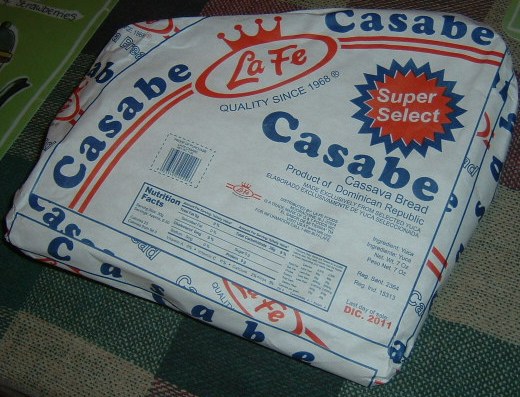
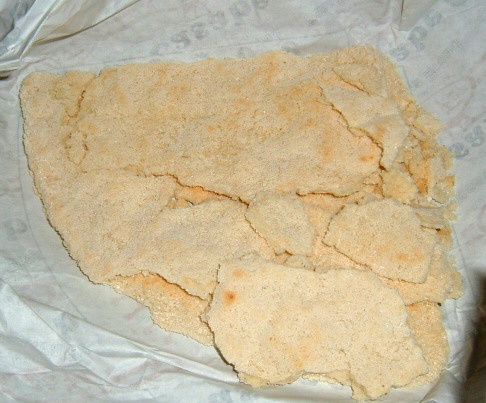
 I’m always finding new products to try, and this week, it was cassava bread.
Prior to buying this product, I had seen, and even made, bread made out of cassava, but it was not what is known on the market as “cassava bread.” This particular bread—a typical product in the Dominican Republic—is dry, flat, and cracker-like. It’s quite plain and meant to be eaten as an accompaniment to meats and stews. (What’s funny is that the store where I bought it had it stacked on a shelf in the produce aisle. Um, sure. You know, plantains, potatoes, and cassava bread all go together, right?)
I asked a Dominican friend at work about it when I brought back from the store during my lunch breadk. She warned me that it’s very plain, and she was right. The texture was dry and hard, and the flavor (if it can be called that) is that of saltless toast. But that makes sense. When eating a spicy stew or sauce-covered meat, this bread is probably just right as a counter balance. I tried mine with tomatoes and olive oil, like a bruschetta. It wasn’t bad. It probably does better when left to soak up stew juices, though.
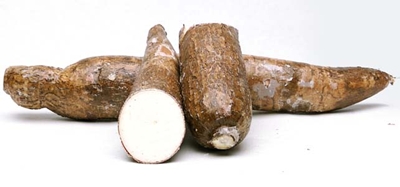
Photo: Melissa’s Produce
Cassava, by the way, also goes by the names yuca, manioc, and tapioca. It’s a staple food for South America, the Caribbean, Southeast Asia, and Africa, and it can be used fresh (i.e., the root) or as a flour (sometimes called tapioca starch). It’s a creamy white root, very starchy, and pretty bland. But it cooks up like a potato and is extremely versatile. It’s not the prettiest root in town, but it’s filling and is a great vehicle for all kinds of flavors. And it’s gluten free!
And, yes, it’s the same tapioca they use to make tapioca pearls from. That’s what you need for pudding and bubble tea. 🙂
Have you ever eaten cassava bread? How did/do you eat it? I love to learn about how ethnic foods are eaten, so please share.

 Miz Chef